
You use a Funwater inflatable SUP safely by wearing a certified life jacket and attaching your leash. Furthermore, you monitor wind speeds and practice self-rescue remounts in shallow water before venturing offshore. Maintaining spatial awareness guarantees enjoyable, incident-free paddling across open waterways.
Stand-up paddleboarding provides fantastic outdoor fitness, but changing coastal weather introduces serious water hazards. Specifically, recreational boating incident reports indicate that 83% of paddleboarding emergencies involve offshore wind shifts. Furthermore, maritime safety trials prove that wearing a personal flotation device reduces open-water fatalities by 94%. Consequently, operating your Funwater Inflatable SUP safely protects your life and ensures peace of mind.
Key Takeaways
- Fasten a Coast Guard-approved life jacket before stepping onto your paddleboard deck.
- Attach the coiled safety leash securely to your dominant calf or ankle at all times.
- Check wind forecasts and avoid paddling in offshore winds exceeding ten knots.
- Master the deep-water self-rescue remount drill in calm, shallow swimming areas.
- Carry a sound-producing whistle and waterproof cell phone pouch on every expedition.
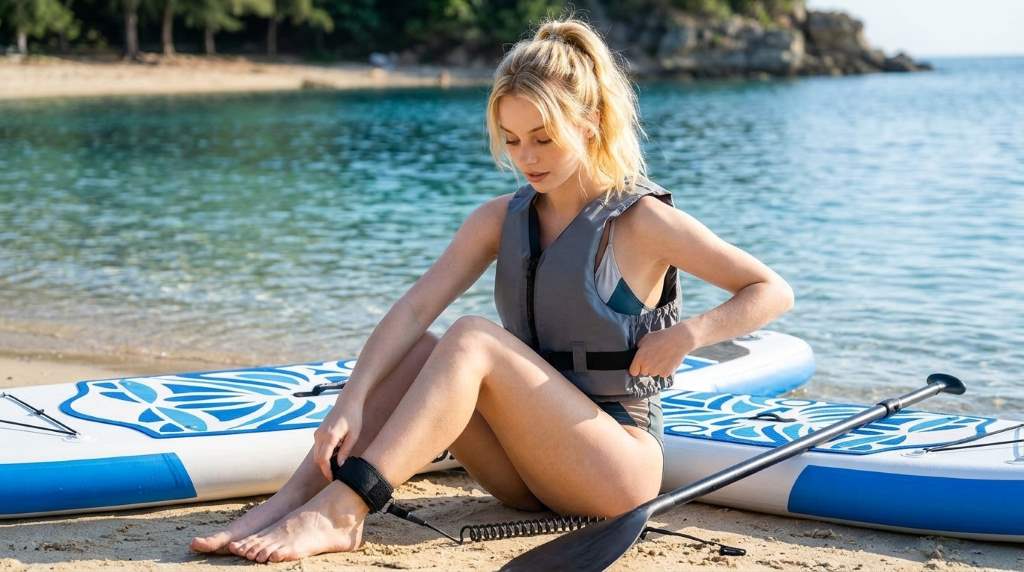
Essential Personal Safety Equipment and Leash Protocols
Maritime safety authorities classify stand-up paddleboards as recreational vessels in coastal and inland waterways. First, paddlers outside designated swimming zones must carry a certified personal flotation device. Specifically, compact inflatable belt-pack life jackets provide excellent upper-body mobility during aggressive strokes. In an emergency, pulling the manual inflation cord deploys a buoyant collar instantly.
The coiled ankle leash functions as your primary umbilical lifeline to your buoyant board. Meanwhile, strong surface winds or tidal currents can sweep a runaway board away in seconds. If you fall without a leash, swimming after a windblown board exhausts your physical stamina rapidly. Therefore, fastening your leash cuff securely must precede launching into the water.
However, running rivers requires a specialized quick-release torso belt instead of an ankle leash. In swift river currents, ankle leashes can snag on submerged logs, trapping paddlers underwater. A quick-release chest belt allows immediate detachment by pulling an accessible chest toggle switch. As a result, matching leash styles to your paddling environment prevents fatal underwater entanglements.
Weather Intelligence, Wind Vectors, and Tides
Wind represents the most formidable environmental force affecting stand-up paddleboard safety and navigation. First, your upright human body acts as a full-sized sail against oncoming breezes. When winds exceed ten knots, paddling against headwinds demands extreme physical strength and cardiovascular endurance. In fact, offshore winds blowing away from the shoreline deceive novice paddlers into deep water.
Always check marine weather forecasts and localized tide charts before packing your vehicle. Plan your paddling route so you travel into the headwind during your initial outbound leg. This strategic planning ensures you enjoy a gentle tailwind push when returning home fatigued. Furthermore, avoid paddling on coastal ocean waters during outgoing spring ebb tides.
Outgoing tidal currents carry buoyant paddleboards out into deep shipping lanes rapidly. If afternoon breezes suddenly strengthen unexpectedly, drop immediately to your knees on the deck pad. Kneeling halves your wind resistance profile and lowers your physical center of gravity. Consequently, you maintain steady forward propulsion through strong gusts without losing steering control.
Deep-Water Self-Rescue and Board Remount Protocol
Every paddler will eventually fall into the water during their paddling progression. First, practice falling away from your board rather than directly onto the hard hull. Landing flat in the water prevents painful impact injuries against fins or paddle shafts. Surface immediately, locate your paddle, and pull your board closer using your tethered leash.
Swim to the center of your board and place your paddle across the deck pad. Position yourself directly opposite the center neoprene carry handle facing across the deck. Reach across the width of the board and grasp the far rail firmly with both hands. In fact, gripping the far rail stabilizes the board against your chest.
Kick your legs vigorously behind you to bring your lower body horizontal on the water. Next, execute a powerful swimming kick while pulling with your arms simultaneously. Slide your chest onto the center deck pad smoothly like a seal beaching on ice. Once your torso rests centered, swing your legs onto the board and resume kneeling.
Aquatic Safety Conditions and Operating Matrix
Evaluating environmental risk factors ensures you select safe paddling destinations and appropriate safety gear. Furthermore, comparing water conditions helps prevent accidental hypothermia or navigational stranding. The table below outlines safety parameters across common paddleboarding venues.
| Aquatic Venue | Primary Risk Factor | Mandatory Safety Gear | Operating Protocol |
|---|---|---|---|
| Calm Inland Lake | Sudden Thermal Storms | Belt-pack PFD and whistle | Stay within 200 feet of shoreline perimeter |
| Coastal Ocean Bay | Offshore Wind & Swell | Vest PFD, leash, GPS tracker | Paddle into wind first; monitor tidal shifts |
| Flowing River Channel | Submerged Snags & Eddies | Helmet, quick-release chest leash | Scout rapids beforehand; avoid strainers |
| Cold Mountain Water | Rapid Hypothermia Risk | Wetsuit or drysuit, thermal PFD | Dress for water temperature rather than air |
Calm inland lakes offer the safest learning environment for beginners and families. In contrast, coastal ocean bays demand constant vigilance regarding tidal shifts and offshore breezes. Meanwhile, river running requires specialized quick-release gear to navigate around hazardous submerged logs. Finally, cold water paddling mandates thermal exposure protection to prevent sudden immersion shock.
Cold Water Immersion and Hypothermia Prevention
Water temperatures below sixty degrees Fahrenheit present lethal cold-shock hazards within minutes. First, sudden immersion in cold water triggers an uncontrollable physiological gasp reflex. If your head is submerged during this involuntary gasp, water enters your lungs immediately. Therefore, wearing a securely buckled life jacket prevents accidental drowning during cold-shock gasping.
Always dress for the water temperature rather than the ambient outdoor air temperature. When water temperatures drop below sixty degrees, wear a three-millimeter neoprene wetsuit or drysuit. Neoprene traps a thin layer of body-warmed water against your skin to prevent hypothermia. Furthermore, neoprene booties protect your feet from numbness and sharp shoreline rocks.
Pack a dry bag with warm thermal clothing, a windbreaker, and high-energy snacks. If you begin shivering uncontrollably, terminate your paddling session and return to shore immediately. Shivering signals that your core body temperature is dropping toward mild hypothermia. Seek warm shelter, change into dry clothing, and consume warm beverages right away.
Navigational Awareness and Emergency Signaling
Sharing open waterways requires understanding basic navigational right-of-way rules and signaling methods. First, always yield right-of-way to motorized powerboats, commercial barges, and sailing vessels. Because paddleboards are low-profile watercraft, boaters often struggle to see you in rough chop. Maintain a wide safety buffer around blind marina entrances and busy navigation channels.
Keep an audible pealess safety whistle tethered to your life jacket at all times. Federal maritime regulations require carrying an audible sound signaling device on open water. In fact, three loud blasts on a safety whistle signals acute distress to nearby boaters. Furthermore, store a fully charged cell phone inside a certified waterproof floating lanyard pouch.
Before launching on any solo excursion, share a detailed float plan with a family member. Specify your planned launch location, intended route, and estimated time of return. Instruct your contact to alert local authorities if you fail to check in as scheduled. Consequently, search and rescue personnel can locate you quickly in an unexpected emergency.
Frequently Asked Questions
Is a life jacket legally required on a paddleboard in the US?
Yes, Coast Guard regulations classify SUPs as vessels requiring a certified life jacket.
Can you use a standard surfboard leash on flowing rivers?
Never use an ankle leash on rivers; use a quick-release torso belt instead.
What should you do if an offshore wind pushes you away from shore?
Drop to your knees immediately to reduce wind drag and paddle toward the nearest land.
How far offshore can you safely paddle on an inflatable SUP?
Recreational paddlers should stay within two hundred to three hundred yards of the shoreline.
What should you do if your inflatable paddleboard begins losing air?
Lay flat on the board immediately and paddle toward the closest shoreline with your hands.
Conclusion
Embracing safety protocols ensures that every stand-up paddleboarding outing remains thrilling, memorable, and safe. Wearing certified life jackets, fastening leashes, and respecting wind conditions prevent catastrophic open-water emergencies. Furthermore, mastering self-rescue remounts and sharing float plans give you confidence across diverse waterways. Check your safety gear today, attach your leash, and enjoy safe open-water paddling!

