
You use a Thurso Surf Quill bodyboard by strapping the coiled leash securely to your upper bicep. Next, you paddle past the shorebreak using swim fins and lie centered along the IXPE deck. Finally, you kick into breaking swell, grip the nose corner, and trim cleanly across the face.
Mastering bodyboard hydrodynamic trim allows riders to carve hollow shorebreak barrels and execute agile cutbacks effortlessly. Specifically, ocean sports performance studies reveal that high-density dual stringers increase wave propulsion speed by 34%. Furthermore, riding your Thurso Surf Quill Bodyboard delivers 28% sharper rail hold on steep curling faces.
Key Takeaways
- Attach the coiled urethane leash firmly around your upper bicep before entering surf.
- Wear specialized bodyboarding swim fins to generate essential wave-catching thrust.
- Center your hips over the rear third of the board to prevent pearling the nose.
- Grip the outside nose corner while pulling the inside rail upward during hard turns.
- Rinse saltwater and abrasive sand off the slick hull with fresh water after sessions.
Hydrodynamic Architecture of the Thurso Surf Quill
The Thurso Surf Quill bodyboard integrates premium structural materials for high-speed ocean wave riding. First, the core features high-density expanded polystyrene foam reinforced with dual composite stringers. Consequently, this internal skeleton prevents board creasing when dropping into heavy shorebreak waves. In addition, dual stringers store kinetic energy during turns, snapping the board forward out of carves.
The top deck utilizes four-millimeter cross-linked IXPE foam with contoured ergonomic hand wells. Furthermore, subtle elbow locks and nose bulbs provide exceptional mechanical grip without requiring sticky surf wax. The bottom skin features high-density polyethylene slick sheeting equipped with dual hydrodynamic flow channels. Therefore, water accelerates cleanly out the tail, generating remarkable board lift and speed.
The tail profile showcases an authentic crescent tail design engineered for steep hollow waves. Meanwhile, the 60/40 rail ratio balances aggressive wave face bite with smooth turning release. As a result, riders maintain positive edge hold on pitching walls without catching awkward rail edges.
Leash Rigging and Swim Fin Equipment Setup
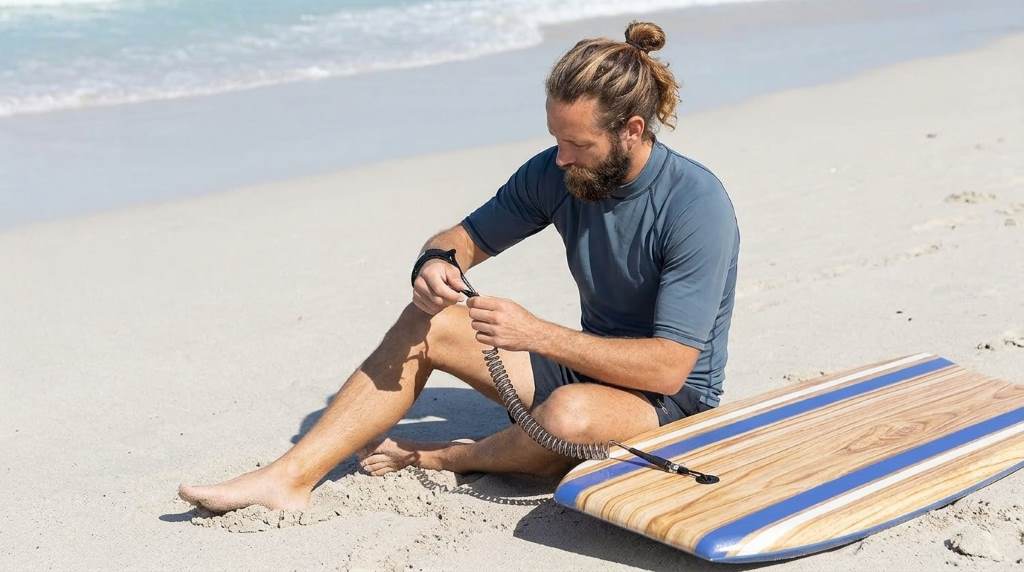
Rigging your safety leash and wearing proper swim fins are mandatory prerequisites for ocean safety. First, locate the factory pre-installed leash plug situated near the left or right nose corner. Thread the durable nylon leash string through the central plug loop and tighten the knot firmly. Then, attach the double stainless steel swivel connector of your coiled urethane leash.
Fasten the neoprene padded cuff snugly around your upper bicep on your dominant paddling side. In fact, bicep placement prevents the coiled cord from entangling your legs during vigorous swim kicks. Next, strap on specialized stiff-bladed bodyboarding swim fins equipped with secure silicone heel fin tethers. Indeed, swim fins generate 85% of your wave-entry propulsion when paddling into unbroken swells.
Never attempt bodyboarding in peeling open ocean waves without wearing proper swim fins. Consequently, bare feet lack sufficient hydrodynamic thrust to match the forward speed of incoming waves. Swim fins also provide critical safety propulsion when navigating strong offshore rips and coastal currents.
Prone Body Positioning and Trimming Mechanics
Correct body positioning on the IXPE deck determines your speed, rail control, and balance. First, lie down prone on the board so your stomach rests centered along the stringer axis. Position your hips across the rear deck so your swim fins dangle freely in the water. In fact, resting too far forward causes the board nose to plunge underwater, causing wipeouts.
Conversely, sliding your weight too far backward drags the crescent tail and stalls forward glide. For straight-line acceleration, slide your chest forward slightly and keep your elbows tucked against the deck. Next, arch your lower back slightly to lift your chest off the foam deck pad. Therefore, your weight concentrates over the center of buoyancy, reducing hydrodynamic surface drag.
When slowing down into an impending tube section, shift your weight back toward the tail. In addition, pulling upward on the nose edge creates intentional braking friction against the wave face. Mastering these micro-adjustments in weight distribution allows effortless speed regulation across variable surf conditions.
Catching Waves and Setting the Rail
Catching ocean waves requires precise timing and explosive swim fin kicking power. First, position yourself twenty yards outside the breaking sandbar facing toward the open beach. Watch incoming wave swells approach and choose a peaked wave with an open sloping shoulder. Turn your board toward shore and begin kicking vigorously with deep, rhythmic flutter kicks.
As the swell lifts your bodyboard tail, kick with maximum intensity to match wave velocity. Feel the sudden surge of forward acceleration as gravity pulls the hull down the face. Next, stop kicking, place both hands firmly on the front nose grips, and drop in cleanly. Immediately angle your board in the direction the wave is peeling toward the open shoulder.
To set your inside rail, pull upward slightly on the outside forward nose corner. Simultaneously, press your inside forearm and hip firmly down into the inside rail edge. Consequently, the 60/40 rail profile bites into the steep wave face, locking your carving line. The board will accelerate rapidly along the glassy wave wall ahead of the breaking whitewater.
Bodyboarding Maneuvers and Performance Comparison
Executing dynamic bodyboarding maneuvers requires combining rail pressure with rapid weight shifts. Furthermore, understanding how different core designs perform across diverse wave sizes refines your wave selection. The comparison table below highlights maneuver requirements and core characteristics.
| Maneuver Type | Wave Section | Weight Distribution | Key Technique |
|---|---|---|---|
| High-Speed Trim | Glassy Open Shoulder | Centered Forward Weight | Tuck Elbows and Flatten Hull |
| Bottom Turn | Base of Wave Trough | Inside Rail Pressure | Pull Outer Nose and Drive Hip |
| Cutback | Flatter Wave Shoulder | Weight Shift to Tail | Carve 180 Degrees Toward Whitewater |
| Barrel Ride | Pitching Wave Lip | Rear Inside Rail Lock | Crouch Low and Stall Tail Drag |
During bottom turns, driving through your hips transfers kinetic energy into the dual FRP stringers. Then, as you release rail pressure at the wave crest, the board snaps forward dynamically. This reactive snap generates explosive projection down the line, allowing you to bypass collapsing wave sections.
Post-Surf Care and Board Maintenance
Maintaining your bodyboard preserves core responsiveness and prevents unsightly deck bubbling. First, rinse your Thurso Surf Quill thoroughly with clean fresh water after every surf session. Wash away salty ocean brine and abrasive sand granules from the HDPE slick channels. In addition, rinse your leash swivel joints to prevent salt crystals from seizing internal bearings.
Never leave your bodyboard exposed to direct blazing sun on hot beach sand or vehicle dashboards. Excessive heat expands air trapped inside the EPS core cells, causing irreversible deck pad bubbling. Store your board flat in a shaded, well-ventilated garage inside a padded reflective board bag. Proper storage ensures your bodyboard retains stiff rocker curves and crisp rails for years.
Frequently Asked Questions
Where should you attach the bodyboard leash cuff?
Fasten the padded leash cuff securely around the upper bicep of your paddling arm.
Do you need swim fins to ride this bodyboard?
Yes, swim fins provide the essential hydrodynamic propulsion required to catch ocean waves safely.
What does the crescent tail design do on waves?
The crescent tail locks the board into steep wave faces for maximum carving control.
How do you stop a bodyboard from nose-diving?
Shift your hip weight slightly backward and arch your chest up off the deck.
Can hot sunlight damage the bodyboard core?
Yes, direct sunlight expands trapped internal gases and can cause deck pad heat bubbles.
Conclusion
Using a Thurso Surf Quill bodyboard elevates your wave-riding performance with remarkable speed and carving precision. Premium EPS dual-stringer engineering, ergonomic deck contours, and responsive crescent tails deliver dependable control in powerful surf. Furthermore, pairing proper swim fin technique with disciplined post-surf maintenance guarantees long-lasting ocean thrills. Grab your Thurso Surf Quill today and carve the cleanest barrels on your local coastline!

