
You adjust a Yvleen SUP paddle by flipping open the quick-release cam clamp on the shaft. Next, you slide the inner handle tube to your desired height using the laser-etched scale. Finally, you snap the cam lever shut firmly to lock the shaft into position securely.
Setting your stand up paddle to the correct mechanical length prevents chronic lower back fatigue. Specifically, clinical sports medicine studies reveal that improper paddle sizing causes 48% of paddling posture complaints. Furthermore, adjusting your Yvleen SUP Paddle properly improves forward stroke mechanical leverage by 31%.
Key Takeaways
- Flip the cam-lock lever outward before sliding the upper shaft handle tube.
- Set paddle height eight to ten inches above your head for recreational flatwater touring.
- Ensure the internal alignment groove tracks straight to keep the T-grip aligned with the blade.
- Tighten the knurled tension thumbscrew if the inner shaft twists during hard paddling strokes.
- Rinse all shaft sections with fresh water to prevent mineral crust and salt corrosion.
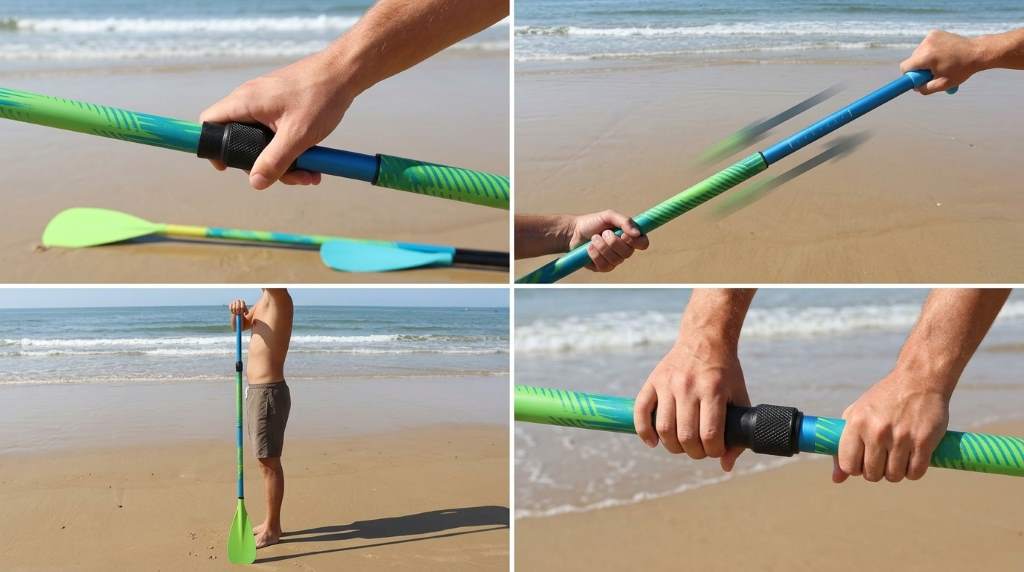
Anatomy of the Yvleen Three-Piece Adjustable Paddle
The Yvleen adjustable paddle utilizes a lightweight three-piece modular breakdown system for effortless transport. First, the main shaft features aircraft-grade anodized aluminum tubing engineered to resist saltwater oxidation. An internal buoyant foam barrier seals the hollow chamber, allowing the paddle to float indefinitely in water. Consequently, accidental drops into deep lakes or ocean swells will not result in lost gear.
The lower section connects to a durable impact-resistant nylon composite blade with dihedral reinforcing ribs. In addition, the blade face incorporates a ten-degree forward cant angle for smooth hydrodynamic water entry. The middle joint locks securely using a spring-loaded stainless steel push-button detent pin. Therefore, the connection remains rattle-free without annoying mechanical wobble during power strokes.
The upper collar houses an adjustable cam-lock clamp paired with a laser-etched measurement scale. Furthermore, an internal anti-twist groove runs along the rear of the inner extension shaft. As a result, the ergonomic T-handle remains permanently aligned with the blade power face at all times.
Determining Your Correct Paddle Length
Finding your ideal paddle height depends on your height, board volume, and intended paddling activity. First, stand barefoot on flat, level ground with your paddle resting vertically beside your toes. Raise your non-dominant arm straight overhead with a soft, relaxed bend in the elbow. Next, adjust the paddle so the ergonomic T-grip sits level with your raised wrist crease.
This traditional wrist crease method positions the paddle roughly eight to ten inches over your head. For recreational touring on flat lakes and calm rivers, this length provides ideal upright posture. Consequently, you engage large abdominal core muscles rather than overworking smaller shoulder and arm muscle groups. Upright spinal alignment also reduces compressive strain across your lower lumbar vertebrae.
If you plan to surf breaking waves, adjust the shaft three to four inches shorter. Shorter lengths accommodate low, athletic crouches required when carving across steep wave faces. In contrast, if paddling an ultra-thick inflatable board, add two inches to compensate for extra deck elevation.
Step-by-Step Adjustment Procedure
Adjusting the Yvleen paddle takes only seconds once you understand the cam-lock mechanism. First, place your thumb under the outer cam lever and flip it outward ninety degrees. The internal friction band releases its grip, allowing the extension shaft to slide freely up and down. Never force the shaft past the maximum extension safety line marked on the tube.
Next, align your target height marking on the laser scale with the top collar edge. The internal anti-twist groove automatically keeps the T-handle and blade power face facing forward. Inspect the grip orientation from above to confirm that the handle sits completely straight. Proper alignment ensures that every stroke transfers maximum propulsive drive through the water.
Finally, push the cam lever inward firmly until it snaps flush against the collar housing. You should feel positive mechanical resistance during the final third of the lever travel. If the lever closes loosely without resistance, open it and turn the tension thumbscrew clockwise. Then, test the connection by applying firm downward pressure onto the T-handle with your palm.
Paddle Height Recommendations Across Water Conditions
Tailoring shaft length to specific water conditions enhances your paddling stability and efficiency. Furthermore, switching height settings mid-session helps you adapt to unexpected weather changes on open water. The reference table below details optimal length adjustments for various stand up paddleboarding scenarios.
| Paddling Discipline | Shaft Height Over Head | Water Type | Ergonomic Focus |
|---|---|---|---|
| Recreational Touring | 8 to 10 Inches | Calm Lakes and Bays | Upright Posture and Core Drive |
| Fitness and Racing | 7 to 9 Inches | Protected Flatwater | High Cadence and Forward Reach |
| SUP Surfing | 5 to 7 Inches | Ocean Shorebreak | Low Center and Rapid Rail Shifts |
| Heavy Headwind Kneeling | Minus 12 to 16 Inches | Open Water Chops | Low Wind Profile and Short Strokes |
Notice the specialized kneeling adjustment setting for sudden afternoon headwinds on open water. When gusts exceed fifteen knots, kneeling on your board lowers your aerodynamic wind profile dramatically. Shortening your paddle by twelve to sixteen inches enables efficient strokes from a comfortable kneeling position. Consequently, you can navigate safely back to shore without exhausting your physical energy.
Calibrating Clamp Tension and Eliminating Shaft Wobble
Repeated adjustment cycles and temperature shifts can loosen clamping screw tension over time. If you notice the handle twisting under heavy stroke pressure, calibrate the clamp immediately. First, flip the cam lever open into the fully unlocked position. Locate the knurled thumbscrew positioned opposite the lever pivot pin on the collar.
Turn the thumbscrew clockwise by one-quarter turn to increase clamping friction against the inner shaft. Next, close the lever and test the locking resistance with your thumb. The lever should close with firm, solid pressure before seating flush against the shaft collar. If it feels too stiff to close without straining, back the thumbscrew off slightly.
Never force an over-tightened lever shut, as excessive force can crack the composite collar. In addition, periodically wipe the inner shaft with a clean microfiber cloth to remove oily sunscreen residues. Clean metal surfaces ensure maximum clamping friction and prevent sudden shaft slippage on the water.
Disassembly, Cleaning, and Seasonal Storage
Proper maintenance protects your Yvleen paddle from corrosive mineral buildup and extends its operational life. First, separate the three paddle pieces after every paddling session in ocean saltwater or muddy rivers. Rinse each aluminum tube and the nylon blade thoroughly with fresh tap water. In fact, dried salt crystals can jam push-buttons and corrode adjustment collar mechanisms.
Stand the disassembled shaft sections vertically on a clean towel to drain internal condensation. Allow the components to air dry completely before packing them into your travel board bag. Furthermore, store the paddle in a cool, shaded environment away from direct sun and scorching temperatures. Disciplined care ensures smooth mechanical adjustments and rattle-free performance for countless paddling adventures.
Frequently Asked Questions
How high above your head should you set a Yvleen paddle?
Set the paddle eight to ten inches above your head for standard recreational flatwater touring.
Does the Yvleen SUP paddle float if dropped in water?
Yes, internal buoyant foam inserts keep the paddle floating on the water surface indefinitely.
How do you stop the paddle shaft from twisting?
Open the cam lever and tighten the collar tension thumbscrew clockwise by one-quarter turn.
Can you adjust the paddle while standing on your board?
Yes, you can easily flip the cam lever open and adjust height while on the water.
Why is there an anti-twist groove on the shaft?
The anti-twist groove keeps the T-handle perfectly aligned with the blade power face automatically.
Conclusion
Adjusting your Yvleen SUP paddle correctly transforms your stand up paddleboarding experience with superior power and comfort. Simple cam-lock adjustments, precise laser measurement scales, and anti-twist grooves make dialing in your fit effortless. Furthermore, maintaining proper clamp tension and rinsing salt prevents wear across seasons of coastal exploration. Adjust your paddle to the perfect height today and enjoy smooth gliding on every paddling expedition!

