
You choose an Oceanbroad surfboard bag by matching your board outline, length, and width precisely. Next, you select the appropriate foam padding thickness for your specific local travel needs. Finally, you verify fin slot compatibility to ensure your board fits with fins attached.
Transporting surfboards without protective bags leads to catastrophic fiberglass dings and costly repairs. Specifically, airline baggage claim analyses indicate that 67% of transit board damage involves crushed rails. Furthermore, choosing a high-quality Oceanbroad Surfboard Bag reduces solar thermal heat absorption by up to 55%.
Key Takeaways
- Choose a bag length two to four inches longer than your surfboard dimension.
- Select wide hybrid bag outlines for fish shapes and grovelers with fuller noses.
- Look for high-density 5mm EPE foam padding to absorb daily transit impacts.
- Ensure the bag incorporates heat-reflective silver tarpaulin to prevent internal wax melting.
- Verify non-corrosive plastic marine zippers to prevent seized zippers from ocean saltwater.
Understanding Surfboard Bag Styles and Outlines
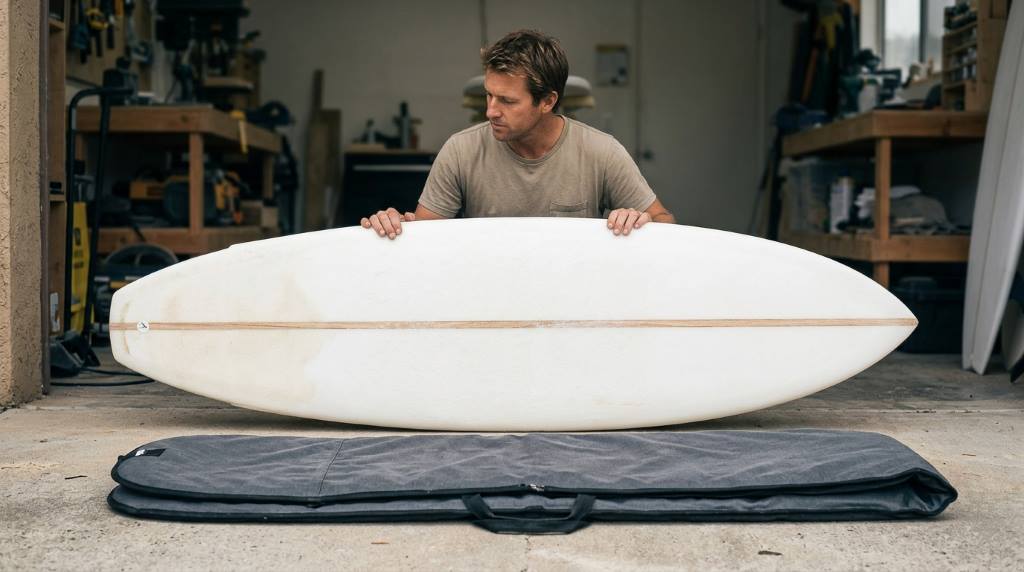
Surfboard outlines vary significantly across modern shortboards, retro fish shapes, and classic longboards. First, matching your bag shape to your surfboard profile prevents pinched rails and strained zippers. Standard point-nose bags cater specifically to modern high-performance shortboards with narrow tips. Consequently, slipping a wide round-nose hybrid board into a narrow bag stresses corner seams.
Fish and hybrid board bags feature wider noses and fuller midpoints to accommodate alternative shapes. In addition, longboard bags provide broad rounded templates designed for boards over eight feet long. Choosing the correct outline guarantees that protective foam cushions the entire rail perimeter evenly. Therefore, your board sits comfortably inside without tight pressure points against outer stitching.
Always measure your surfboard width across its widest point before purchasing any bag model. Add at least two inches to your board width when calculating bag clearance requirements. Extra width accounts for rail thickness and deck curvature without binding along the zipper track. In fact, generous outline sizing makes sliding boards in and out effortless at the beach.
Evaluating Foam Thickness and Transit Protection
The protective capability of any surfboard bag depends directly on internal foam density and thickness. First, Oceanbroad day bags utilize five-millimeter closed-cell high-density EPE foam core padding. This thickness provides an ideal balance between lightweight everyday maneuverability and dependable impact absorption. Consequently, daily car trunk trips and tailgate transport remain completely ding-free.
For heavy airline travel and intercontinental flights, ten-millimeter padding offers superior multi-layer crush protection. However, ten-millimeter travel coffins add significant bulk and weight for quick daily beach trips. In contrast, five-millimeter day bags remain agile, easy to carry, and simple to roll up. Therefore, daily commuters prefer five-millimeter bags for convenient roof rack and vehicle transit.
Closed-cell foam also resists water absorption if outer shells ever suffer deep scrapes or punctures. Furthermore, the structural resilience of closed-cell padding prevents foam breakdown under prolonged pressure. As a result, your surfboard rails remain cushioned against tailgate knocks year after year.
Materials, UV Reflectivity, and Hardware Durability
Coastal environments subject surf luggage to harsh ultraviolet sunlight, abrasive sand, and corrosive saltwater. First, Oceanbroad bags feature reflective silver tarpaulin on bottom and deck surfaces. This radiant barrier reflects intense solar infrared rays away from your fiberglass surfboard deck. Consequently, internal temperatures stay cool, preventing messy melted wax puddles and laminate delamination.
The top deck shell combines heavy-duty 600D ripstop polyester with water-resistant polyurethane backing. Furthermore, reinforced polyester nose and tail patches absorb heavy friction when resting boards upright. Heavy-duty nylon webbing surrounds the entire perimeter to reinforce critical load-bearing seams. Indeed, robust structural stitching prevents sudden seam blowouts when carrying heavy wet boards.
Hardware quality determines whether your board bag survives extended seasons exposed to marine air. Oceanbroad utilizes heavy-grade molded plastic zippers that cannot rust or oxidize from saltwater exposure. In addition, dual zipper sliders allow easy access from either side of the tail. Premium nylon zippers slide smoothly without binding, even when coated with fine beach sand.
Surfboard Bag Selection Matrix
Selecting the perfect bag model requires aligning board length with intended transportation routines. Furthermore, evaluating bag dimensions against vehicle roof racks ensures secure highway transit. The comparison guide below highlights recommended bag parameters across common surfing scenarios.
| Surfboard Type | Recommended Bag Length | Padding Thickness | Primary Usage |
|---|---|---|---|
| Shortboard (5’8″ to 6’4″) | 6’0″ to 6’6″ | 5mm EPE Foam | Daily Car and Roof Rack Transit |
| Fish / Groveler (5’6″ to 6’2″) | Wide 6’0″ to 6’4″ | 5mm EPE Foam | Local Beach Commutes with Keel Fins |
| Funboard / Mid-Length (6’8″ to 7’6″) | 7’0″ to 7’10” | 5mm EPE Foam | Everyday Coastal Exploration |
| Longboard (8’6″ to 10’0″) | 9’0″ to 10’4″ | 5mm to 8mm EPE Foam | Highway Roof Rack Cruising |
Notice that recommended bag lengths always exceed surfboard lengths by several critical inches. Specifically, choosing a bag two to four inches longer accommodates surfboard thickness effortlessly. A 6’0″ surfboard fits best inside a 6’3″ or 6’4″ day bag. Extra tail room also prevents pressure against trailing edge fin boxes and sharp squash tails.
Essential Features: Fin Slots, Straps, and Pockets
Practical convenience features distinguish premium board luggage from basic generic fabric sleeves. First, look for an expanding velcro fin slot situated near the bag tail opening. An integrated fin slot allows you to slide your board inside with fins installed. Consequently, you avoid unscrewing center fins or thruster sets before every single car trip.
Carrying comfort is equally crucial when hiking down rugged bluff trails to secluded breaks. Oceanbroad bags feature an ergonomic, detachable shoulder strap equipped with thick padded mesh. In addition, a reinforced padded center grab handle offers balanced one-handed suitcase-style portage. Sturdy side grab handles allow easy lifting onto tall truck tailgates and SUV racks.
Interior storage compartments keep essential surf accessories organized in one secure spot. Look for internal zippered wax pockets to stash wax combs, spare fin keys, and leashes. Storing sharp fin hardware separately prevents accidental scratches against delicate surfboard rail finishes. Meanwhile, keeping wax bars enclosed stops melting wax from contacting your surfboard bottom.
Maintenance and Long-Term Bag Care
Maintaining your surfboard bag ensures reliable protection and prevents unpleasant mildew odors over time. First, never leave soaking wet wetsuits or damp beach towels trapped inside zipped bags. Trapped moisture fosters aggressive mold spores that deteriorate interior foam linings and fabric coatings. Always hang your board bag open in a well-ventilated garage after damp sessions.
Periodically rinse exterior zippers and tarpaulin shells with fresh tap water to clear salt grime. In fact, washing away salt prevents abrasive grit from wearing down nylon zipper teeth. If zippers ever feel stiff, lubricate the zipper track with zipper wax or silicone spray. Never force stuck sliders with metal pliers, which can crack molded plastic slider bodies.
Store your surfboard bag flat or hanging vertically from padded wall hooks when empty. Avoid folding empty bags tightly across foam sections for prolonged winter storage periods. Repeated hard creasing can crush internal closed-cell foam cells, reducing impact absorption along crease lines. Proper care guarantees your surfboard travel gear remains trail-ready for countless seasons.
Frequently Asked Questions
What size Oceanbroad bag should you buy for your board?
Choose a bag length two to four inches longer than your surfboard dimension.
Can you transport a surfboard with fins inside this bag?
Yes, the integrated velcro fin slot allows transport with center fins installed.
Does the reflective silver tarpaulin prevent wax from melting?
Yes, the reflective surface deflects solar heat and reduces internal bag temperatures effectively.
Will the marine zippers corrode from ocean saltwater?
No, heavy-duty molded plastic marine zippers resist salt oxidation and never rust.
Is 5mm foam thick enough for daily roof rack travel?
Yes, 5mm high-density EPE foam provides exceptional protection against roof rack pressure.
Conclusion
Choosing the right Oceanbroad surfboard bag safeguards your valuable quiver against dings and sun damage. Matching bag outlines, verifying foam padding, and insisting on rust-proof hardware ensures worry-free transportation. Furthermore, integrated fin slots and heat-reflective tarpaulin shells keep your boards ready for instant wave action. Select your ideal surfboard bag size today and protect your boards on every surf mission!

