
Balance on a Sloosh inflatable paddle board by standing with your feet shoulder width apart, keeping your knees slightly bent, and looking toward the horizon instead of your feet. Smooth paddle strokes, proper body posture, and calm movements help you stay stable while improving confidence on the water.
Learning to balance well builds confidence and makes every paddle session safer and more enjoyable. According to the Outdoor Industry Association, millions of people enjoy paddle sports annually, while beginner training significantly reduces common falls. If you own a Sloosh inflatable paddle board, understanding proper balance techniques will help you paddle longer with less effort and better control.
Why Balance Matters on an Inflatable Paddle Board
Good balance improves stability, efficiency, and overall safety during every paddle session. Strong balance also reduces fatigue because your muscles work together naturally.
Many beginners assume inflatable boards feel unstable before trying proper techniques. However, modern inflatable paddle boards offer impressive stability when used correctly.
Understand the Board Before Standing Up
Every paddle board has a center balance point that supports your body weight efficiently. Standing close to this area creates better stability and smoother movement.
The carrying handle usually marks the center standing position on most inflatable paddle boards. Therefore, use it as your starting reference during practice.
Know Your Board Width
Wider boards provide greater stability than narrow performance models during beginner sessions. Most recreational inflatable boards measure between 32 and 34 inches wide.
A stable platform allows you to focus on technique instead of constant corrections. Consequently, learning becomes easier and far more enjoyable.
Choose the Right Water Conditions
Calm lakes and protected bays create the best learning environment for beginners. Flat water minimizes unnecessary movement and improves confidence quickly.
Avoid windy afternoons or areas with boat traffic during your first practice sessions. Instead, paddle early in the morning when conditions stay calmer.
Wear Proper Safety Equipment
Always wear a properly fitted personal flotation device before entering the water. Safety equipment protects you if unexpected conditions develop.
Attach your ankle leash securely before standing on the board. As a result, your paddle board remains nearby after an accidental fall.
Start from a Kneeling Position
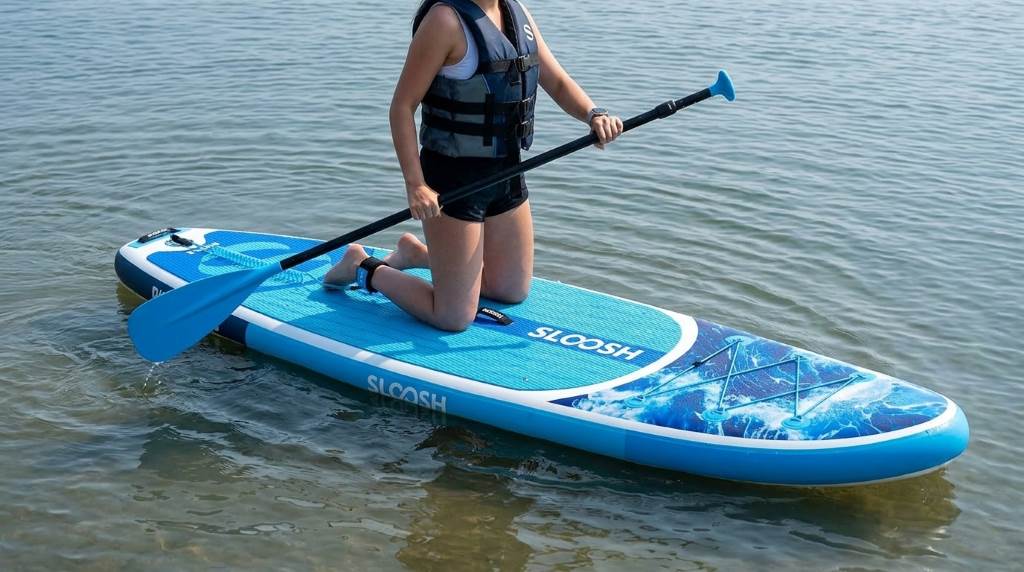
Begin by kneeling directly behind the center carrying handle with your paddle across the board. This position lets you understand how the board responds.
Practice several paddle strokes while remaining on your knees before standing. Consequently, you develop confidence without unnecessary pressure.
Stand Up the Right Way
Place your paddle across the board for additional support while rising carefully. Move one foot at a time into the standing position.
Keep your feet parallel and shoulder width apart once standing comfortably. Then, straighten gradually while maintaining relaxed knees.
Use Proper Body Position
Keep Your Knees Slightly Bent
Soft knees absorb small waves and natural board movement during every paddle stroke. Locked knees make balancing much harder.
Your legs should remain active without becoming stiff or tense. Therefore, stay relaxed throughout each paddle session.
Look Forward Instead of Down
Focus your eyes on the horizon rather than your feet while paddling. Looking ahead naturally improves posture and body alignment.
Many beginners lose balance because they constantly watch the board beneath them. Instead, trust your footing and maintain forward vision.
Keep Your Core Engaged
Your abdominal muscles support overall stability throughout every movement on the board. A strong core reduces unnecessary body sway.
Gentle core engagement works better than excessive muscle tension during paddling. Consequently, your movements remain smooth and controlled.
Hold the Paddle Correctly
The paddle acts as another point of stability while standing on the board. Proper grip improves control and reduces wasted energy.
Keep one hand on the top handle and the other midway down the shaft. Then, switch sides regularly for balanced paddling.
Use Smooth Paddle Strokes
Short, controlled strokes maintain better balance than aggressive pulling motions. Smooth movements keep your body centered over the board.
Rotate your torso instead of relying only on your arms during each stroke. As a result, paddling becomes more efficient and comfortable.
Practice Weight Distribution
Shift your weight gradually whenever changing direction or adjusting your stance. Sudden movements often create unnecessary instability.
Keep your body centered over both feet whenever possible during normal paddling. Balanced weight distribution improves overall control immediately.
Improve Balance with Simple Exercises
Practice balance exercises on land before entering the water whenever possible. Better stability on land transfers naturally to paddle boarding.
- Single leg standing exercises
- Bodyweight squats
- Plank holds
- Side lunges
- Core strengthening routines
Regular practice strengthens important muscles while improving coordination over time. Therefore, balancing becomes much easier during real sessions.
Common Balance Mistakes to Avoid
Many beginners repeat the same mistakes during their first paddle boarding experiences. Recognizing these habits helps you improve faster.
- Looking directly at your feet
- Standing with locked knees
- Holding the paddle incorrectly
- Making sudden body movements
- Choosing rough water too early
- Standing too far forward or backward
How to Recover When You Feel Unsteady
Stay calm whenever the board begins moving unexpectedly beneath your feet. Panic usually causes unnecessary falls.
Lower your center of gravity by bending your knees slightly more. Then, plant your paddle into the water for extra stability.
Building Long Term Confidence
Consistent practice creates noticeable improvement within only a few paddle sessions. Small gains eventually produce excellent overall balance.
Challenge yourself gradually by exploring different conditions after mastering calm water. However, increase difficulty only when you feel completely comfortable.
Quick Balance Checklist Before Every Session
- Wear a personal flotation device.
- Attach the ankle leash securely.
- Stand near the board center.
- Keep knees slightly bent.
- Look toward the horizon.
- Use smooth paddle strokes.
- Stay relaxed throughout the session.
Conclusion
Learning how to balance on a Sloosh inflatable paddle board becomes much easier with proper posture, steady movements, and regular practice. Start in calm water, follow the techniques above, and build confidence step by step for enjoyable paddling experiences every time.
Practice these methods during your next outing and continue refining your skills with every session. Better balance will improve your comfort, confidence, and overall enjoyment on the water.
Frequently Asked Questions
How long does it take to learn paddle board balance?
Most beginners develop basic balance after a few practice sessions in calm water.
Should I look at my feet while paddle boarding?
No, looking toward the horizon provides better balance and body alignment.
What foot position works best on an inflatable paddle board?
Keep your feet parallel and shoulder width apart near the board center.
Can beginners use an inflatable paddle board?
Yes, wide inflatable paddle boards provide excellent stability for new paddlers.
Does core strength improve paddle board balance?
Yes, stronger core muscles improve stability, posture, and overall board control.

