
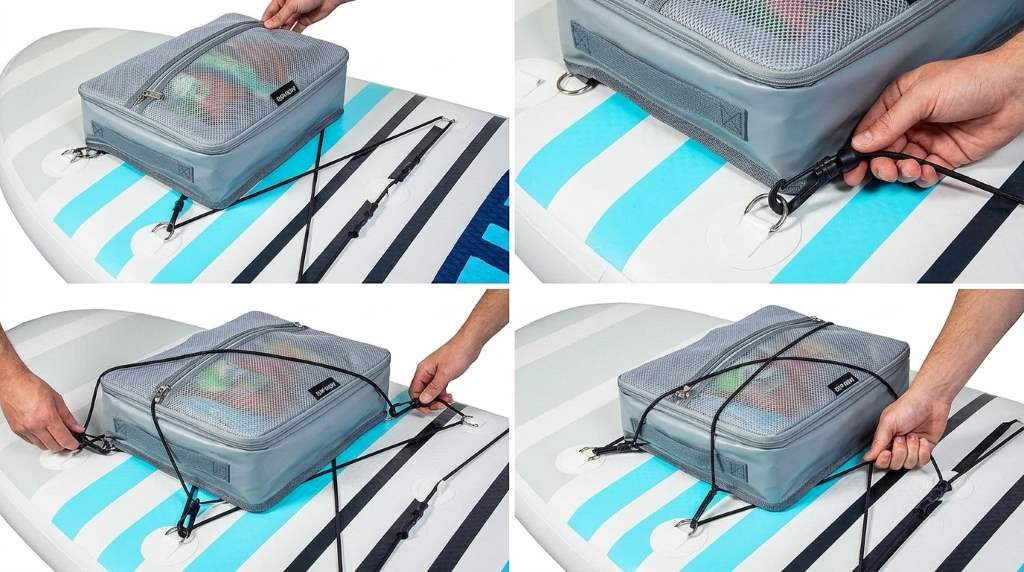
Attach the SUP Now Paddle Board Cooler by securing its straps through your paddle board’s front bungee system or D rings. Tighten every strap evenly, confirm the cooler stays stable, and test it before entering the water.
Many paddle board owners carry drinks, snacks, and personal items during long sessions. According to outdoor recreation reports, paddle boarding participation continues growing while more paddlers prefer practical storage accessories. Therefore, using the Sup now paddle board cooler correctly helps improve convenience and balance throughout every trip.
Why Proper Cooler Attachment Matters
A properly attached cooler improves stability while reducing unwanted movement on the board. Secure mounting also protects your gear from accidental falls into the water.
Loose accessories shift during turns, waves, and quick paddling movements. Consequently, they may affect balance and reduce your confidence while standing.
Correct installation also prevents unnecessary wear on straps and attachment points. As a result, both your cooler and paddle board remain in better condition.
What You Need Before Installation
Gather everything before starting the installation process. Preparation makes attachment faster while reducing setup mistakes.
- SUP Now paddle board cooler
- Paddle board with front bungee cords or D rings
- Factory cooler straps
- Dry towel for cleaning the deck
- Small waterproof bag for valuables
Inspect Your Paddle Board First
Check your paddle board before attaching any accessory. Clean attachment areas provide stronger grip and better strap security.
Look for damaged bungee cords, loose D rings, or worn deck pads. Replace damaged hardware before carrying extra weight.
Remove sand, dirt, and salt residue from the deck surface. Afterwards, every strap sits flatter against the board.
Understand the Cooler Attachment Points
Built In Straps
Most SUP Now coolers include adjustable straps for quick installation. These straps fit different paddle board layouts without additional tools.
Front Bungee Storage Area
Many paddle boards feature elastic bungee cords near the front deck. This location keeps weight balanced while leaving standing space open.
D Rings
Several inflatable and hard paddle boards include metal or reinforced D rings. These anchors provide extra security during rough water conditions.
How to Attach the SUP Now Paddle Board Cooler Step by Step
Step 1: Place the Cooler Correctly
Position the cooler near the front storage area of the board. Leave enough standing room behind the cooler for comfortable paddling.
Step 2: Align the Straps
Thread every strap beneath the front bungee cords or through available D rings. Keep each strap flat without twists for maximum strength.
Step 3: Tighten Evenly
Pull every strap gradually instead of tightening one side completely first. Even pressure keeps the cooler centered on the board.
Step 4: Check Stability
Push the cooler gently from different directions after tightening the straps. It should move very little during normal pressure.
Step 5: Load Your Gear
Pack heavier items near the bottom inside the cooler. Then place lighter snacks and drinks above them for improved balance.
Best Placement for Better Board Balance
Weight distribution affects paddling performance more than many beginners expect. Balanced cargo improves tracking and reduces unnecessary wobbling.
Avoid placing the cooler too close to the nose of the board. Instead, position it slightly behind the front bungee storage area.
Heavy coolers should remain centered along the board’s middle line. This position keeps both sides equally balanced while paddling.
Common Attachment Mistakes to Avoid
- Leaving straps loose before launching
- Overloading the cooler beyond its capacity
- Blocking the standing area
- Ignoring damaged attachment points
- Skipping a stability check before paddling
Avoiding these mistakes improves safety and protects your equipment. Furthermore, proper habits make every outing more enjoyable.
Tips for Rough Water Conditions
Double check every strap before entering choppy water. Stronger waves create additional movement during paddling sessions.
Keep valuable electronics inside waterproof cases even within the cooler. Extra protection reduces risk if unexpected splashes occur.
Reduce unnecessary cargo during windy conditions whenever possible. Lighter loads improve handling and overall board control.
Maintaining Your SUP Now Paddle Board Cooler
Rinse the cooler with fresh water after every trip. Salt and dirt gradually weaken straps and hardware over time.
Allow every component to dry completely before storage. Proper drying helps prevent mold, unpleasant odors, and material damage.
Inspect buckles and stitching regularly for signs of wear. Replace damaged parts before your next paddling adventure.
When Should You Remove the Cooler?
Remove the cooler before transporting your paddle board on a vehicle. Separate transport reduces stress on both the board and attachment straps.
Detach the cooler during cleaning or long term storage. This simple habit extends the lifespan of every component.
Conclusion
Attaching the SUP Now Paddle Board Cooler correctly takes only a few minutes when following the proper steps. Secure straps, balanced weight, and regular inspections create a safer and more enjoyable paddling experience.
Before your next adventure, inspect every attachment point, tighten each strap carefully, and test stability on land. A few extra moments of preparation help protect your gear and improve every trip.
Frequently Asked Questions
Can I attach the cooler without D rings?
Yes, most paddle boards allow attachment through the front bungee cord system.
How tight should the cooler straps be?
The straps should be snug enough to prevent movement without damaging the board.
Where should I place the cooler?
Place it near the front storage area while keeping enough standing space available.
Can I keep valuables inside the cooler?
Yes, although waterproof pouches provide additional protection for important items.
Should I remove the cooler after every trip?
Yes, removing and drying the cooler helps extend its lifespan.

