
You adjust a Karltion SUP paddle by releasing the quick-lock lever clamp on the upper shaft. Next, you slide the inner handle tube to match your preferred standing paddling height. Finally, you snap the cam-lock clamp shut securely to eliminate shaft slippage.
Proper paddle sizing prevents acute rotator cuff fatigue and boosts forward stroke propulsion dramatically. Specifically, biomechanical sports laboratory data reveals that incorrect paddle length increases shoulder strain by 42%. Furthermore, tuning your Karltion SUP Paddle With Glass Fiber Blade boosts forward stroke efficiency by 28%.
Key Takeaways
- Release the cam lever clamp before sliding the inner shaft.
- Add eight to ten inches above your head height for standard touring.
- Align the anti-twist groove to keep the blade squarely aligned with the T-grip.
- Tighten the collar thumbscrew if the inner shaft twists under paddling pressure.
- Rinse the composite blade and shaft joints with fresh water after every session.
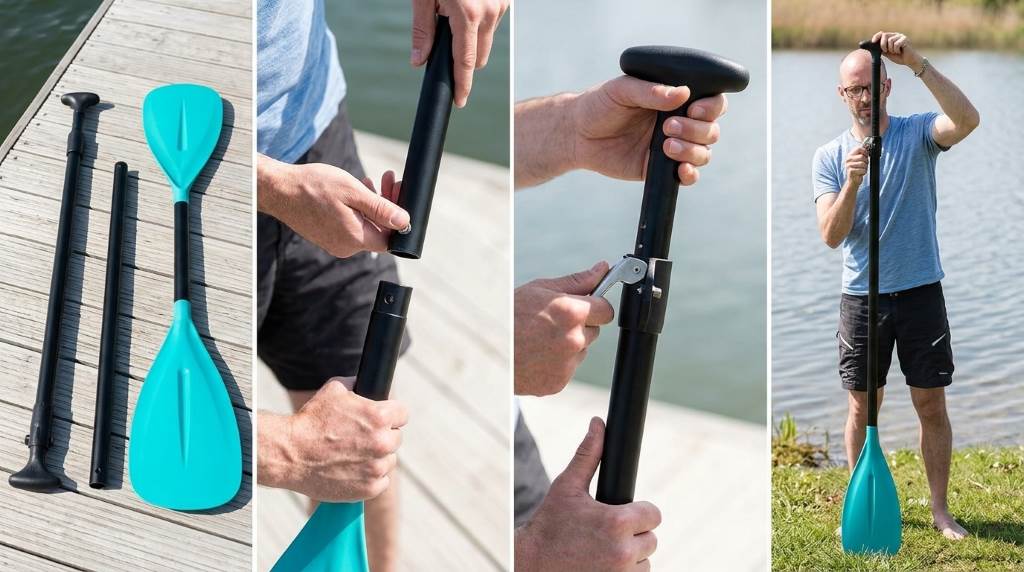
Anatomy of the Karltion Glass Fiber SUP Paddle
The Karltion paddle pairs a rigid shaft with an impact-resistant glass fiber composite blade. First, the blade incorporates continuous filament glass fibers impregnated with tough thermoset resin. Consequently, this construction provides responsive flex during catch phases while resisting gravel abrasions. In addition, the dihedral blade spine channels water evenly across both faces to prevent blade flutter.
The shaft uses lightweight aircraft aluminum or composite carbon blend tubing. Furthermore, laser-etched measurement markings along the inner shaft show exact imperial and metric length settings. An internal anti-twist groove runs lengthwise along the adjustment shaft. Therefore, the ergonomic T-handle remains perfectly aligned with the blade power face at all times.
The clamping collar houses a stainless steel cam lever and micro-adjustment tension bolt. As a result, paddlers can adjust clamping pressure without needing screwdrivers on the water. The ergonomic palm grip features textured synthetic composite for non-slip finger retention. Consequently, paddlers maintain positive control in choppy conditions and driving rain.
Determining Your Optimal Paddle Height
Setting your paddle length correctly depends on your body stature and specific paddling discipline. In fact, standing upright with relaxed shoulders creates the baseline for all subsequent measurements. Stand barefoot on a level flat surface next to your vertical Karltion paddle. Next, raise one arm overhead with a gentle, relaxed bend in the elbow.
For touring and flatwater cruising, adjust the T-grip to touch your raised wrist crease. Consequently, this setting adds roughly eight to ten inches to your overall standing height. For ocean surfing, adjust the grip level with your eyebrow or forehead. In contrast, racing paddlers prefer seven to nine inches of extension for higher cadences.
If you paddle an exceptionally thick multi-layer inflatable board, add two additional inches. Indeed, high-volume boards float higher above the water line than thin hardboards. Therefore, extra shaft length keeps the glass fiber blade fully submerged during power strokes. Proper depth immersion ensures maximum forward drive on every single stroke.
Step-by-Step Adjustment Procedure
Adjusting the Karltion paddle requires three straightforward mechanical steps before launching your board. First, flip the exterior cam lever outward to disengage the internal clamping friction ring. The inner shaft will now slide smoothly up and down within the outer shaft tube. Ensure you do not force the shaft beyond the maximum extension line.
Next, slide the handle shaft until your desired measurement aligns with the collar rim. Notice how the internal anti-twist channel guides the shaft along a straight directional track. In addition, verify that the T-grip palm rest matches your blade power face direction. Proper orientation ensures your blade enters the water at the intended hydrodynamic angle.
Finally, push the cam lever inward firmly until it snaps flush against the collar. The lever should offer firm mechanical resistance as it passes the cam center point. If the lever closes loosely, open it and rotate the tension thumbscrew clockwise. Then, close the lever again to test that the shaft holds rigid under firm downward force.
Paddle Sizing Across Different Water Disciplines
Different paddling conditions demand specific shaft length adjustments for optimal biomechanical leverage. Furthermore, adjusting your paddle to the environment protects your lower back and shoulder joints. The comparison table below highlights standard length recommendations for various stand up paddleboarding styles.
| Paddling Discipline | Length Over Head | Water Type | Primary Benefit |
|---|---|---|---|
| Recreational Touring | 8 to 10 Inches | Lakes and Flat Bays | Optimal Posture and Reach |
| SUP Surfing | 6 to 8 Inches | Ocean Shorebreak | Quick Maneuvers and Low Stance |
| Fitness and Racing | 7 to 9 Inches | Open Water Courses | High Cadence and Aerobic Power |
| River Whitewater | 4 to 6 Inches | Fast Rapids | Rapid Bracing and Low Center |
Recreational touring benefits from a longer shaft that promotes upright torso posture. Consequently, paddlers engage core abdominal muscles while keeping their spines in neutral alignment. On the contrary, SUP surfing requires a shorter paddle to accommodate low, crouched athletic stances. Shorter shafts also allow rapid side-to-side transitions when catching steep breaking waves.
Calibrating Clamp Tension and Fixing Shaft Play
Over extended seasons of paddling, vibration and temperature cycles may loosen clamp tension. In fact, loose collars allow the handle shaft to twist or slip downward mid-stroke. Fortunately, calibrating clamping tension takes less than thirty seconds using the integrated thumbscrew mechanism. First, flip open the cam lever so the internal locking ring relaxes completely.
Locate the small tension screw or knurled thumbscrew opposite the lever pivot pin. Then, turn the screw clockwise by one-quarter turn to tighten the clamping diameter. Next, push the lever closed to assess the closing resistance against your palm. The lever should press down smoothly with distinct tension before snapping shut cleanly.
Never overtighten the tension screw to an extreme degree. Indeed, excessive clamping force can crack composite shaft fibers or strip delicate collar threads. If the clamp slips despite proper tension, inspect the inner shaft for greasy residues. Wiping the adjustment tube clean with rubbing alcohol restores complete friction lock immediately.
Maintenance and Care for Composite SUP Paddles
Caring for your composite paddle preserves shaft elasticity and prevents stubborn salt corrosion. First, disassemble the three-piece paddle into separate sections after every saltwater outing. Then, rinse each piece thoroughly with fresh tap water to wash away dried salt crystals. In fact, dried salt can weld aluminum and composite joint sleeves permanently.
Allow the separated sections to air dry completely in shaded conditions before reassembly. Avoid storing damp paddle shafts sealed inside airtight bags or hot automobile interiors. Furthermore, store your paddle horizontally on padded wall racks or inside protective blade covers. Protecting the glass fiber blade edges avoids chipping against hard garage concrete floors.
Periodically inspect the blade perimeter for hairline fractures or rock strike gouges. Small resin dings can be sealed easily with waterproof marine epoxy sealant. In addition, apply a light drop of silicone lubricant onto the cam lever pivot pin annually. Smooth mechanical pivots ensure effortless adjustment out on the open water for years.
Frequently Asked Questions
How high should you set your Karltion SUP paddle?
Set the handle grip eight to ten inches above your head for standard flatwater paddling.
What prevents the Karltion paddle handle from twisting?
An internal anti-twist groove runs along the shaft to keep the T-grip squarely aligned.
How do you tighten a slipping paddle shaft clamp?
Open the lever and tighten the tension screw clockwise by one-quarter turn.
Can you use a Karltion paddle in ocean saltwater?
Yes, but you must rinse all components thoroughly with clean fresh water afterward.
Why does the blade use glass fiber composite material?
Glass fiber provides superior hydrodynamic blade flex while resisting impact chipping from rocks.
Conclusion
Adjusting your Karltion SUP paddle with glass fiber blade unlocks exceptional power and shoulder comfort. Accurate shaft length sizing promotes optimal posture while reducing muscular strain across long paddling expeditions. Furthermore, maintaining proper cam clamp tension ensures responsive stroke transfer on every water excursion. Adjust your paddle height accurately today and enjoy effortless gliding on your next paddling voyage!

