
When it comes to surfing, the connection between a surfer and their board is paramount, and waxing plays a crucial role in maintaining that bond. Waxing your surfboard isn’t just a routine; it’s an essential practice that enhances your performance and safety in the water. A well-waxed board allows for better grip and stability, enabling you to paddle, pop up, and ride those waves with confidence. Imagine catching a huge wave only to find yourself slipping off your board. Not a pleasant experience, right? Regularly waxing can prevent such scenarios and keep you focused on enjoying the ride.
Role of Nose and Tail Wax
While waxing the entire board is important, special attention should be given to the nose and tail areas, as they play unique roles during surfing.
- Nose Wax: Helps in executing nose rides and ensures you maintain control during tricky maneuvers.
- Tail Wax: Crucial for making quick turns and powering through strong wave sections.
Both areas require different types of wax for optimal performance. Utilizing the right wax not only enhances grip but also contributes significantly to your overall surfing experience. So, before hitting the waves, take a moment to ensure your board is properly waxed; it could very well be the difference between a great ride and a wipeout!

Types of Wax for Surfboards
Sticky Basecoat Waxes
Choosing the right type of wax for your surfboard can drastically impact your surfing experience, starting with sticky basecoat waxes. These are the foundation for a solid grip and are designed to create a tacky surface that adheres well to your board. Sticky basecoat waxes come in various formulations, tailored for different water temperatures. For example:
- Cold Water Basecoat: Ideal for frigid surf, keeping your feet glued to the board.
- Warm Water Basecoat: Perfect for balmy days at the beach, providing a stable grip without the risk of melting away.
Applying a basecoat is essential before adding a topcoat, as it provides the texture needed for maximum traction.
Topcoat Waxes
Once you have your basecoat in place, it’s time to enhance your grip with topcoat waxes. These waxes are formulated to provide additional stickiness and can significantly improve your surfing performance. They are usually softer than basecoat waxes and come in various types suited for different conditions:
- Soft Topcoat: Best for warmer waters, offering a super tacky surface.
- Hard Topcoat: Designed for cooler waters, designed to withstand the elements and maintain maximum grip.
The combination of both basecoat and topcoat waxes not only protects your surfboard but also elevates your ride by ensuring you have the best possible traction!
Preparation Before Waxing
Cleaning Your Surfboard
Before diving into the waxing process, cleaning your surfboard is a critical first step that shouldn’t be overlooked. A clean surface ensures that the wax adheres properly and performs at its best. Start by rinsing your board with fresh water to remove salt and sand from your last surf session. Here’s a simple cleaning method I often use:
- Wash with Mild Soap: Use a gentle, non-toxic soap and a soft sponge to scrub off any stubborn grime.
- Rinse Thoroughly: Make sure to rinse off all the soap to avoid any residue that could interfere with the wax.
- Dry Completely: Use a soft towel to dry the board, as applying wax to a wet surface can create problems down the line.
Removing Old Wax
After cleaning, it’s time to tackle the old wax. Accumulated wax can become crumbly and create a slick surface, which is the last thing you want while surfing. To remove old wax:
- Use a Wax Comb: Gently scrape off the old wax starting from the nose to the tail. This tool can make the job easy and effective.
- Clean with Heat: If stubborn wax remains, you can use a hairdryer on low heat and soften the wax for easier removal.
Preparing your board properly not only enhances the lifecycle of your wax but also improves your overall surfing experience. A clean and well-prepped board is a happy board ready to hit the waves!
How to Wax the Nose of Your Surfboard
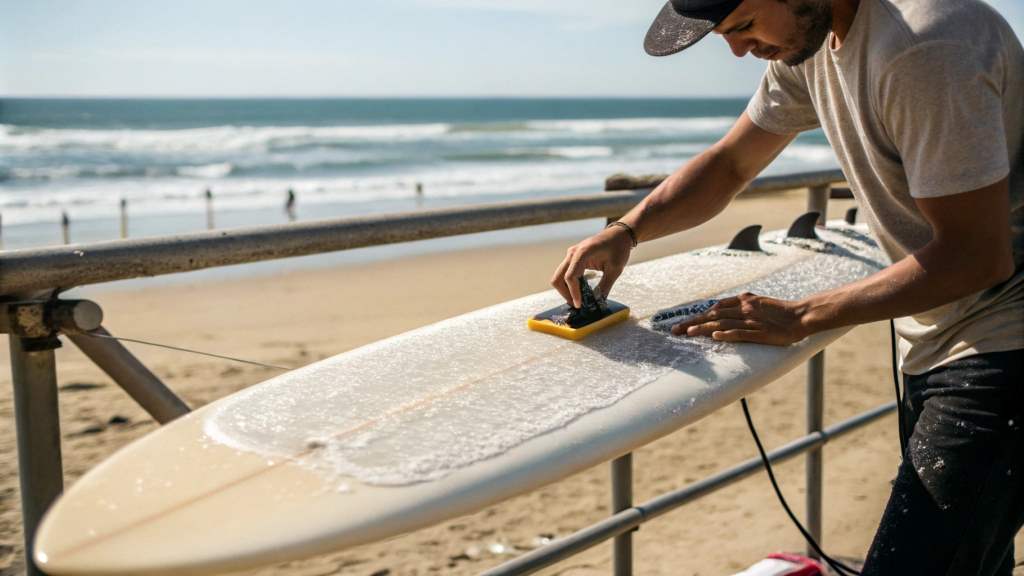
Applying Basecoat Wax
Now that your board is clean and ready, it’s time to focus on waxing the nose—a crucial area for maintaining control and precision during your rides. Start with your basecoat wax, which forms the foundation for grip. Steps to Apply Basecoat Wax:
- Choose the Right Wax: Make sure you’re using a basecoat that fits the water temperature where you typically surf.
- Start at the Nose: Hold your board vertically or at an angle, then take your basecoat wax and start rubbing it in a circular motion at the nose.
- Even Application: Ensure the wax covers a generous area of the nose, about 6-8 inches back from the tip. This circular application helps create texture for grip.
This step is vital because a well-prepped nose enables smoother, more confident maneuvers.
Adding Topcoat Wax
Once the basecoat is applied, it’s time to amp up the grip with a topcoat wax. This layer will give you that extra stickiness you need for those challenging nose rides and quick turns. Steps for Topcoat Application:
- Use the Same Techniques: Similar to the basecoat, apply the topcoat wax using circular motions.
- Layer It On: Apply a more generous layer than the basecoat, focusing on adding texture.
- Check for Consistency: Ensure the surface feels tacky and ready for action.
Following these steps for both basecoat and topcoat will ensure your nose is prepped to perform at its best, keeping you stable and secure as you ride. Now, your board is ready to tackle those waves with confidence!
Waxing the Tail of Your Surfboard
Techniques for Tail Waxing
With the nose of your surfboard waxed and ready, it’s time to move to the tail—the area that plays a pivotal role in turning and dropping into waves. Waxing the tail requires a slightly different technique to ensure your foot remains securely attached during those powerful maneuvers. Steps for Tail Waxing:
- Choose Your Wax: As with the nose, select the appropriate basecoat and topcoat wax for the water conditions you’ll be surfing in.
- Position Your Board: Hold the surfboard so that the tail is facing you, making it easier to access.
- Basecoat Application: Just like before, rub the basecoat wax onto the tail in a circular motion. Focus on an area ranging from 8 inches from the tail towards the back. This ensures you have enough grip when placing your foot down.
- Topcoat Application: After the basecoat, apply a thicker layer of topcoat wax, repeating the circular motion for a solid and sticky surface.
Tips for Maximum Performance
To maximize your performance, consider these additional tips:
- Layer Wisely: A healthy layer of topcoat is crucial, especially for the tail where most of the pressure occurs during sharp turns.
- Regular Inspections: Make it a habit to check your tail wax regularly, especially before a big surf session.
- Mind the Conditions: Remember that different surf conditions may require you to adjust the type and amount of wax you use.
By ensuring your tail is well-waxed, you’ll improve your grip and control, allowing you to focus on catching those epic waves instead of worrying about slipping off your board. Happy surfing!
Maintenance Tips for Waxing Your Surfboard

Regular Wax Inspections
Keeping your surfboard in top condition goes beyond just applying wax—it’s about maintaining that grip throughout the surfing season. Regular wax inspections are a smart practice that every surfer should adopt. After each surf session, take a moment to check your wax. Here’s what to look for:
- Surface Condition: Check if the wax feels sticky and grips well. If it’s starting to feel smooth or crumbly, it’s time for a refresh.
- Cracks or Indents: Look for any areas where the wax has cracked or become indented from your foot pressure. These spots can compromise your traction.
- Cleaning Needs: If you see sand or debris stuck in the wax, it’s a good indicator that you need to clean and re-wax.
Doing these mini inspections will ensure you catch any issues before they impact your performance.
Re-waxing Schedule
Alongside regular inspections, having a re-waxing schedule can greatly enhance your surf sessions. Consider following these guidelines:
- Every 5-7 Sessions: If you surf frequently, re-waxing every five to seven sessions is a good rule of thumb.
- Seasonal Changes: As water temperatures change with the seasons, adjust your wax types accordingly. A switch from a warm to a cold water wax may be necessary.
- Long Breaks: If you haven’t surfed in a while, always check and reapply wax before heading back out.
By implementing these maintenance tips, you’ll ensure that your surfboard remains ready for action, giving you the best chance at those epic rides!
Advanced Waxing Techniques
Using Wax Combs
As surfers gain experience, refining their board maintenance techniques can make a world of difference, and one of the most practical tools in a surfer’s toolkit is the wax comb. Using a comb not only helps to maintain your wax layers but enhances grip and performance significantly. How to Use a Wax Comb:
- Scrape Off Old Wax: Begin by using the comb’s edge to gently scrape off any old wax. This action creates a cleaner surface that allows new wax to adhere better.
- Create Texture: After applying fresh wax, use the comb to rake lines into the wax. These grooves help in creating a textured surface that provides superior grip as you ride.
- Personal Touch: Some surfers even prefer to create specific patterns that work best for their foot placement—experimenting can lead to finding what feels right for you.
This tool is not just practical; it’s essential for ensuring consistent performance.
Hot Waxing Method
Another advanced technique worth exploring is hot waxing. This method combines the benefits of both hard and soft waxes, creating a sticky and durable surface for surfing. Steps for Hot Waxing:
- Heat Your Wax: Using a wax comb or a small heat gun, gently warm the wax before applying it to your board.
- Apply Evenly: Spread the melted wax in a circular motion across the desired areas until you achieve the perfect coat.
- Create Texture: After application, use the comb again to create ridges. The heat helps the wax adhere better and results in a more durable finish.
Hot waxing can elevate your board’s performance, especially in challenging surf conditions. With these advanced techniques, you’ll be prepared to tackle any wave that comes your way!

