
Stand Up Paddle Boarding (SUP) is one of the fastest-growing water sports in the world. Whether you’re gliding across calm lakes, riding ocean waves, or exploring scenic rivers, SUP offers a fun and full-body workout for all ages and skill levels. However, choosing the right paddle board can feel overwhelming, especially with the variety of options available for both beginners and experienced paddlers.
In this guide, you’ll learn how to select the perfect Stand Up Paddle Board for your needs. We’ll cover everything from understanding the different types of paddle boards to selecting the right size, material, and features. By the end, you’ll feel confident in making a choice that enhances your paddling experience.
If you’re in the market for a Stand Up Paddle Board, you’re in the right place. Let’s dive in!
Why Choosing the Right Paddle Board Matters
Selecting the right paddle board is crucial for both safety and enjoyment. A board that’s too small or unstable can make paddling difficult and increase the risk of falls. On the other hand, a board that’s too large or heavy can be cumbersome to maneuver and transport. According to a 2024 report by the Outdoor Foundation, over 4.4 million Americans participated in stand-up paddleboarding, highlighting its growing popularity and the importance of choosing the right equipment.
The right paddle board enhances your stability, improves your paddling efficiency, and ensures you have fun on the water. Whether you’re a beginner looking for a stable board to build confidence or an expert seeking a high-performance model for racing or surfing, there’s a paddle board designed to meet your needs.
Types of Stand Up Paddle Boards
Paddle boards come in various shapes and sizes, each designed for specific activities and skill levels. Understanding the different types will help you narrow down your options and find the best board for your needs.
All-Around Paddle Boards
All-around paddle boards are the most versatile and popular choice for beginners and recreational paddlers. They are designed to perform well in a variety of conditions, including calm lakes, slow-moving rivers, and small ocean waves. All-around boards typically range from 10 to 12 feet in length and 30 to 34 inches in width, offering a good balance of stability, maneuverability, and speed.
These boards are great for general paddling, fitness, and even light touring. Their wide and stable design makes them easy to balance on, which is ideal for beginners still developing their skills.
Touring Paddle Boards
Touring paddle boards are designed for longer distances and open water paddling. They are longer and narrower than all-around boards, typically ranging from 12 to 14 feet in length and 28 to 32 inches in width. This design allows for greater speed and efficiency, making them ideal for exploring lakes, rivers, and coastal waters.
Touring boards often feature a displacement hull, which helps the board cut through the water more smoothly and reduces drag. This makes them a great choice for experienced paddlers who enjoy long-distance paddling or multi-day expeditions.
Surf Paddle Boards
Surf paddle boards are shorter and more maneuverable, designed specifically for riding waves. They typically range from 7 to 10 feet in length and are narrower than all-around boards, which allows for quick turns and better control in the surf. Surf SUPs are ideal for experienced paddlers who want to take their skills to the waves.
These boards often feature a planing hull, which provides lift and speed in the surf. They are less stable than all-around or touring boards, so they are not recommended for beginners.
Racing Paddle Boards
Racing paddle boards are built for speed and performance. They are long, narrow, and lightweight, typically ranging from 12 to 14 feet in length and 25 to 28 inches in width. Racing boards are designed to minimize drag and maximize efficiency, making them ideal for competitive paddlers and those looking to improve their speed.
These boards often feature a displacement hull and are made from high-performance materials like carbon fiber. They require more skill and balance to paddle, so they are best suited for experienced paddlers.
Inflatable Paddle Boards
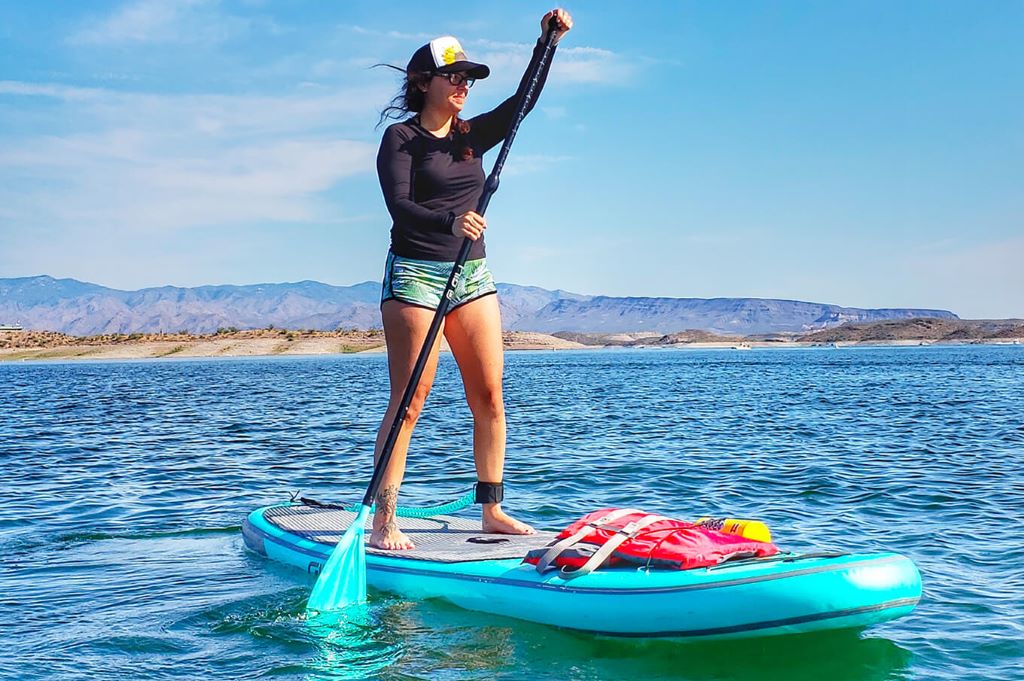
Inflatable paddle boards (iSUPs) are a popular choice for their portability and durability. They are made from military-grade PVC and can be inflated and deflated for easy transport and storage. Inflatable boards come in a variety of shapes and sizes, making them suitable for all skill levels and activities.
iSUPs are incredibly versatile and can be used for everything from recreational paddling to yoga and fishing. They are also more forgiving than hard boards, making them a great option for beginners.
Key Features to Consider When Choosing a Paddle Board
When selecting a paddle board, consider the following key features to ensure you get the best performance and enjoyment:
Length
The length of your paddle board affects its speed, stability, and maneuverability. Longer boards are faster and more efficient for long-distance paddling, while shorter boards are more maneuverable and easier to control in the surf. For beginners, a board between 10 and 12 feet in length offers a good balance of stability and performance.
Width
The width of your paddle board impacts its stability. Wider boards are more stable and easier to balance on, making them ideal for beginners. Narrower boards are faster and more efficient but require more balance and skill to paddle. For most paddlers, a board between 30 and 34 inches in width provides a good balance of stability and performance.
Thickness
The thickness of your paddle board affects its buoyancy and weight capacity. Thicker boards can support more weight and are more stable, while thinner boards are lighter and more maneuverable. For most paddlers, a board between 4 and 6 inches in thickness is suitable.
Hull Type
The hull type of your paddle board determines how it performs in the water. There are two main types of hulls:
- Planing Hull: Flat and wide, providing lift and stability. Ideal for surfing and recreational paddling.
- Displacement Hull: Pointed and narrow, cutting through the water for greater speed and efficiency. Ideal for touring and racing.
Material
Paddle boards are made from a variety of materials, each offering different levels of durability, performance, and cost. Common materials include:
- Epoxy/Fiberglass: Lightweight and durable, offering a good balance of performance and affordability.
- Carbon Fiber: Ultra-lightweight and high-performance, ideal for racing and advanced paddlers.
- Plastic: Affordable and durable, but heavier and less performance-oriented.
- Inflatable (PVC): Portable and durable, suitable for all skill levels and activities.
Choosing the Right Paddle Board for Your Skill Level
Beginners
If you’re new to stand-up paddleboarding, start with an all-around or inflatable paddle board. These boards offer the stability and versatility you need to build your skills and confidence. Look for a board that is at least 10 feet long and 30 inches wide, with a planing hull for easy balance and maneuverability.
Intermediate Paddlers
Once you’ve mastered the basics, you can start exploring different types of paddle boards based on your interests. If you enjoy long-distance paddling, consider a touring board. For surfing, opt for a surf-specific SUP. If you’re looking to improve your speed, a racing board may be the right choice.
Experts
Experienced paddlers can benefit from high-performance boards tailored to their specific needs. Whether you’re into racing, surfing, or long-distance touring, there’s a paddle board designed to enhance your performance. Look for boards made from advanced materials like carbon fiber, with features like displacement hulls and optimized shapes for speed and efficiency.
Personal Experience: Finding the Perfect Paddle Board
When I first started paddleboarding, I made the mistake of choosing a board that was too narrow and unstable for my skill level. I struggled to balance and found myself falling into the water more often than I’d like to admit. Determined to improve my experience, I invested in a wider, all-around inflatable paddle board.
The difference was incredible. The added stability allowed me to focus on my paddling technique and build my confidence. I was able to explore calm lakes and slow-moving rivers with ease, and even tried my hand at SUP yoga. As my skills improved, I eventually upgraded to a touring board for longer expeditions, which opened up a whole new world of paddling adventures.
This experience taught me the importance of choosing the right board for your skill level and intended use. A quality paddle board can transform your experience on the water, making it more enjoyable and rewarding.
Tips for Maintaining Your Paddle Board
To extend the life of your paddle board and keep it performing at its best, follow these maintenance tips:
- Rinse your board with fresh water after each use to remove salt, sand, and debris.
- Store your board in a cool, dry place, away from direct sunlight and extreme temperatures.
- Regularly inspect your board for signs of wear or damage, and repair any issues promptly.
- If you have an inflatable board, make sure to dry it thoroughly before storing to prevent mold and mildew.
By taking proper care of your paddle board, you’ll ensure it continues to provide years of enjoyment on the water.
Frequently Asked Questions
What is the best paddle board for beginners?
The best paddle board for beginners is an all-around or inflatable board that is at least 10 feet long and 30 inches wide. These boards offer the stability and versatility needed to build skills and confidence.
Should I choose an inflatable or hard paddle board?
The choice between an inflatable and hard paddle board depends on your needs and preferences. Inflatable boards are more portable and durable, making them a great option for beginners and those with limited storage space. Hard boards offer better performance and are ideal for experienced paddlers looking for speed and efficiency.
What size paddle board do I need?
The size of your paddle board depends on your skill level, intended use, and body weight. For beginners, a board between 10 and 12 feet in length and 30 to 34 inches in width offers a good balance of stability and performance. Always check the board’s weight capacity to ensure it can support your weight.
Can I use a paddle board for yoga or fishing?
Yes, many paddle boards are designed for activities like yoga and fishing. Look for boards with a wide, stable platform and features like attachment points for fishing gear or a non-slip deck for yoga.
How often should I replace my paddle board?
With proper care and maintenance, a high-quality paddle board can last for many years. However, if you notice significant wear, such as cracks, dents, or a loss of rigidity, it may be time to replace your board.
Conclusion
Choosing the right Stand Up Paddle Board is essential for a safe, enjoyable, and rewarding experience on the water. By understanding the different types of paddle boards, key features to consider, and how to match a board to your skill level, you can make an informed decision that enhances your paddling adventures.
Whether you’re a beginner looking for a stable board to build your skills or an expert seeking a high-performance model for racing or surfing, there’s a paddle board designed to meet your needs. Investing in the right board will not only improve your performance but also increase your enjoyment and confidence on the water.
Now that you’re equipped with the knowledge to choose the perfect paddle board, it’s time to hit the water and start your next adventure!
What’s your favorite type of paddle board? Share your experiences or ask any questions in the comments below!

