
Surfing. The very word conjures images of sun-drenched beaches, exhilarating rides, and a deep connection with the ocean. But before you stand up and carve that perfect turn, there’s a fundamental, often underestimated element: paddling. This article will dive deep into the best exercises to improve surfboard paddling you can do off the water to build the specific strength, stamina, and mobility needed to transform your paddling from a weakness into a superpower. Get ready to catch more waves and surf for longer!
Surfboard Paddling: The Key to Every Wave
Surfboard paddling isn’t just part of surfing—it is surfing. It’s the first motion you make when you enter the water, and it’s the motion you’ll do most often in a session. From getting past the break to positioning yourself in the lineup and powering into waves, paddling is everything.
Strong, efficient paddling means more waves, longer sessions, and less frustration. Without it? You’ll be left behind, exhausted before the real fun begins.

Why Your Paddling Matters
Your ability to paddle directly affects:
- Wave count: Better paddling equals better positioning and quicker responses to approaching waves.
- Session length: Strong paddlers can stay out longer with less fatigue.
- Injury prevention: Proper form and muscle balance help avoid shoulder and back issues.
- Surf progression: Without solid paddling, you simply can’t get enough practice on waves to improve.
Yet many surfers overlook this skill. The good news? It’s totally trainable—with the right exercises.
Common Mistakes Surfers Make with Paddling
Despite spending hours in the water, many surfers struggle with poor technique and weak conditioning. Common culprits include:
- Overreliance on arms: Neglecting back and core muscles leads to quick burnout.
- Poor body position: Dragging legs or arching the lower back too much creates resistance.
- Shoulder overuse injuries: Lack of mobility and rotator cuff training often results in pain.
- Zero dryland training: Surfing alone rarely builds sufficient paddling endurance.
Recognize any of those? Then you’re in the right place.
Muscles Used in Surfboard Paddling
To train effectively, you need to know which muscles matter most in the paddle stroke:
| Muscle Group | Role |
| Lats & Rhomboids | Pulling power and propulsion |
| Deltoids & Rotator Cuff | Stroke control and shoulder stability |
| Core (Abs, Obliques, Lower Back) | Body stabilization on the board |
| Triceps & Biceps | Stroke extension and arm motion |
| Glutes & Legs | Maintain streamlined positioning |
Each one plays a unique role. If just one is weak or tight, your paddling will suffer.
Back Power: Paddling’s Main Engine
Your lats and rhomboids generate the majority of propulsion. A powerful pull equals faster paddling, better wave timing, and smoother entries. Focus on these:
- Pull-Ups: The gold standard. Aim for strict form—don’t kip or swing.
- Lat Pulldowns: Great for beginners building toward full pull-ups.
- Resistance Band Rows: Perfect for high reps and endurance gains.
Consistency is key. Perform these 2–3 times per week, varying tempo and volume.
Pulling Strength: Key to Speed
Speed matters most when catching waves. Building strong biceps and supporting muscles helps you paddle harder during bursts.
Try:
- Bent-Over Dumbbell Rows
- Single-Arm Rows (bench-supported)
- Seated Cable Rows
Focus on control and mind-muscle connection. Don’t just “go through the motions.”
Row Like a Pro: Dumbbell Rows & Resistance Bands
Why these exercises shine:
- Dumbbell Rows: Isolate one side, correct imbalances.
- Band Rows: Improve muscular endurance for longer paddle-outs.
Tip: Use slow eccentrics (lowering phase) to enhance strength and joint health.
Shoulder Endurance: The Silent Workhorse
Shoulders take a serious beating in surfing. Prevent burnout with these:
- Face Pulls: Improve posture and strengthen rear delts.
- Overhead Press (light): Reinforce pushing stability.
- Band External Rotations: Support the rotator cuff—essential for injury prevention.
Think rehab, not just performance. High reps and control matter more than heavy loads here.
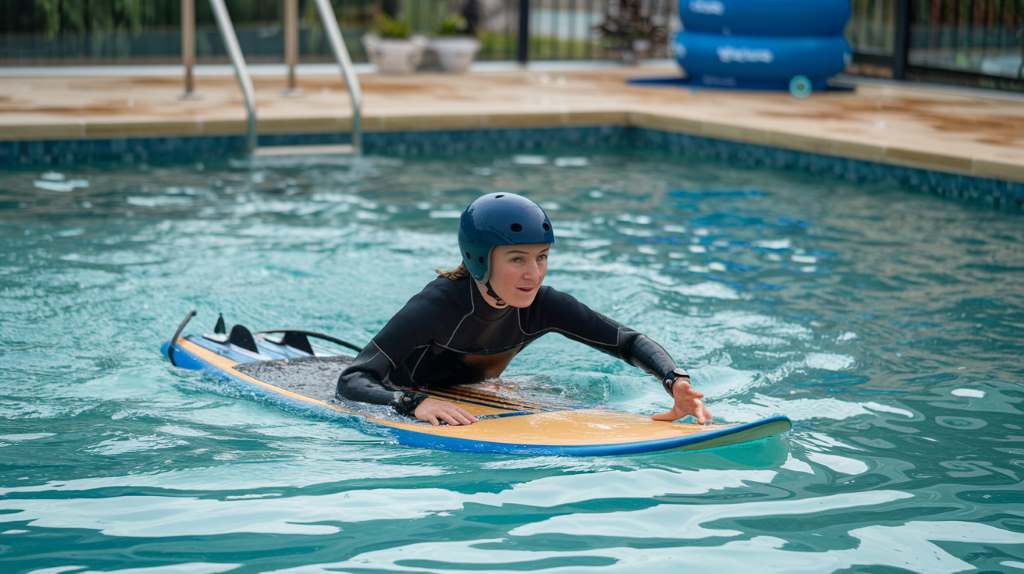
Joint Longevity: Injury-Proof Your Shoulders
Surfers often neglect shoulder health—until it’s too late.
Include:
- Internal/External Band Rotations
- Scapular Push-Ups
- Sleeper Stretches
These subtle movements pay off massively in pain-free paddling and shoulder longevity.
Core Control: Paddle Longer, Paddle Stronger
Your core is the foundation for every paddle stroke. Without it, you’ll tire quickly and lose efficiency.
Best core movements for surfers:
- Planks: Master all variations—standard, side, and shoulder taps.
- Russian Twists: Hit the obliques for lateral control.
- Bird-Dogs: Strengthen lower back and cross-body control.
Add these to the end of every workout.
Low Back Love: Protecting Your Surf Engine
Lying prone for hours takes a toll on the lower back. Strengthen it with:
- Supermans
- Back Extensions
- Swimmers
Keep reps moderate and consistent. Focus on activation, not overload.
Hip and Glute Engagement
Your hips anchor your movement. Weak glutes? Hello, instability and drag.
Incorporate:
- Glute Bridges
- Hip Thrusts
- Clamshells (with bands)
Stay grounded and powerful in the water by building a stable base.
Thoracic Mobility and Paddle Efficiency
Shoulder range starts in your thoracic spine (mid-back). A tight thoracic area limits your reach and slows paddling.
Fix it with:
- Cat-Cow
- Foam Roller Extensions
- Thread the Needle
Daily mobility = smoother paddle strokes.
Stretch It Out: Mobility Drills for Surfers
Stiff joints limit your stroke and invite injury.
Best surfer stretches:
- Doorway Chest Stretch
- Cross-Body Shoulder Stretch
- Foam Rolling Lats & Upper Back
Stretch after every workout and surf session. Your future self will thank you.
Paddle-Fit Cardio: Building Endurance
Strength without stamina is like a surfboard without wax—slippery and ineffective.
Include:
- Swimming Laps (Freestyle & Breaststroke)
- Rowing Machine Intervals
- Steady-State Jogging or Cycling
Endurance lets you outlast the current—and your competition.
HIIT for Wave Readiness
Match the on-off rhythm of surfing with High-Intensity Interval Training.
Sample session:
- 30 seconds sprint
- 60 seconds rest
- Repeat 10–15 rounds
Use a stationary bike, hill sprints, or rowing machine.
Swimming as Cross-Training
Nothing beats swimming for paddle fitness.
Try:
- 100m Freestyle Intervals
- Pyramid Sets (e.g., 50m, 100m, 200m, 100m, 50m)
- T-Shirt Drills (adds drag)
This builds both technique and lung power.
Full Body Surf Simulators
Can’t get in the ocean? Try land-based alternatives:
- Indo Board Training
- Burpee to Paddle Simulation
- Resistance Band Paddle Reps
They’re fun, effective, and super surf-specific.
Sample Surf Paddle Training Week

Day 1: Strength (Back & Core)
Day 2: Cardio + Mobility
Day 3: Strength (Shoulders & Core)
Day 4: Swim Intervals
Day 5: Active Recovery (Mobility + Light Cardio)
Aim for 3–5 sessions weekly. Prioritize quality over quantity.
Tools of the Trade
Gear worth owning:
- Resistance Bands
- Dumbbells (adjustable)
- Foam Roller
- Pull-Up Bar
- Yoga Mat
You don’t need a gym to train like a pro.
Warm-Up and Cool-Down Essentials
Neglecting warm-ups? Big mistake.
Warm-up ideas:
- Arm circles
- Jumping jacks
- Dynamic stretches
Cool-down essentials:
- Foam rolling
- Static stretching
- Deep breathing
Bookend your workouts properly.
Signs You’re Improving
How to track your paddle gains:
- Longer surf sessions without fatigue
- Easier duck dives and paddle-outs
- Faster wave catch rate
- Reduced shoulder soreness
Progress feels good, doesn’t it?
Many surfers have shared their “before and after” stories—most of them echo the same thing: when they took dryland paddling seriously, they caught more waves, had fewer injuries, and enjoyed surfing way more.
Avoiding Overtraining Pitfalls
Watch for these red flags:
- Chronic soreness
- Sleep issues
- Poor surf performance
Recovery isn’t a reward. It’s part of the process.
Board Choice and Paddle Efficiency
Your equipment matters. Choose a board that:
- Has enough volume for your weight
- Offers a flat rocker for easier glide
- Feels stable under your chest
Sometimes, better paddling starts with better gear.
Nutrition Tips for Paddle Power
Eat for performance:
- Protein for recovery
- Carbs for fuel
- Electrolytes for hydration
Keep snacks in your surf bag. Fuel up pre- and post-session.
Mental Toughness in Paddling
Paddling is as mental as it is physical. Stay patient. Embrace the grind. Every stroke you take is one step closer to that perfect wave.
FAQs
What’s the best exercise for surf paddling?
Pull-ups, hands down. They directly mimic the paddle stroke.
How often should I train for paddling?
2–4 times weekly, depending on how often you surf.
Is swimming better than gym workouts?
Both are great! Combine them for best results.
Can paddling technique improve without surfing?
Yes, dryland drills and video feedback can help tremendously.
Why does my lower back hurt when paddling?
Weak core and tight hips are likely culprits. Address both.
How long before I notice paddling improvements?
With consistent training, expect real gains in 4–6 weeks.
Conclusion
Improving your surfboard paddling isn’t optional—it’s essential. With the right training plan, you can build the strength, stamina, and fluidity to make every wave session count.
Whether you’re a weekend warrior or an aspiring pro, these exercises will give you the edge. Ride the future—stronger, longer, and with way more stoke.

