
Ever watched experienced surfers glide effortlessly under crashing waves and wondered, “How do they do that?” Learning how to duck dive a surfboard is crucial for any surfer aiming to progress beyond beginner waves. This essential skill lets you conserve energy, avoid wipeouts, and paddle out to the lineup more efficiently. Let’s break down this fundamental maneuver step-by-step, ensuring you can conquer those breaking waves with confidence.
Understanding the Importance of Duck Diving
Duck diving isn’t just a stylish move; it’s a practical necessity. It allows you to:
- Conserve energy by avoiding lengthy paddle-arounds.
- Prevent being thrown off your board by incoming waves.
- Reach the lineup faster and with less fatigue.
- Enhance your overall surfing experience by increasing control.
This technique is particularly valuable when dealing with larger, more powerful waves, where paddling through would be nearly impossible. Mastering the duck dive allows surfers to handle challenging conditions with ease.
Step-by-Step Guide to Duck Diving
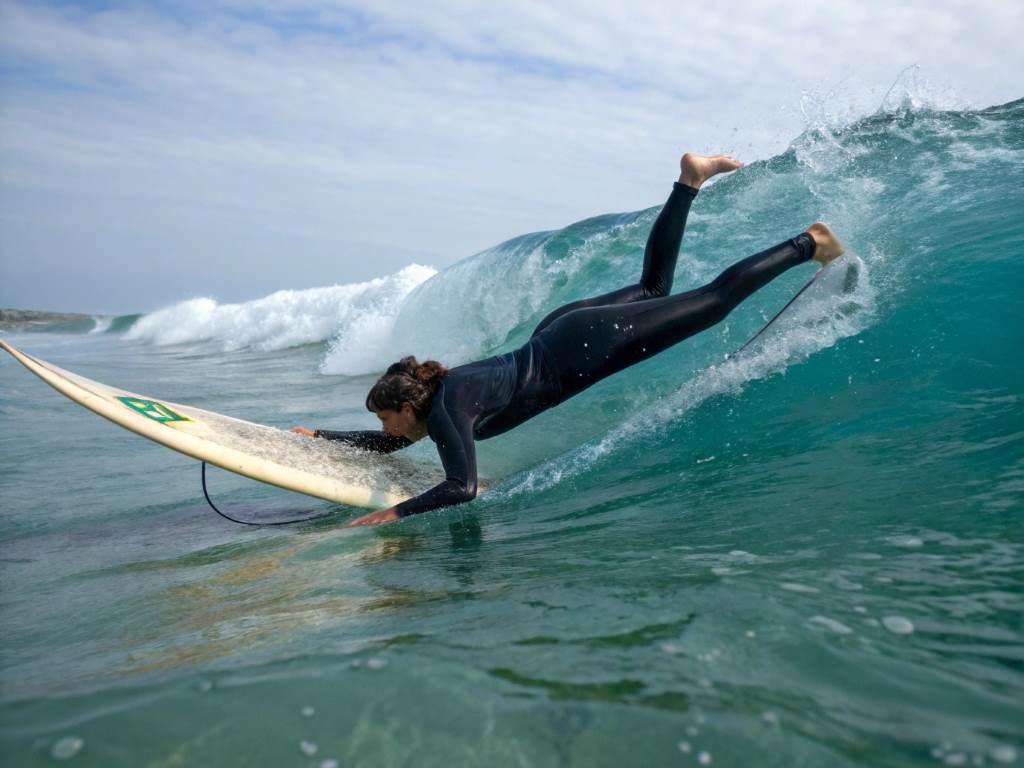
Here’s a detailed breakdown of the duck dive technique:
1. Positioning and Timing
- Approach the wave with speed and maintain a stable stance.
- Identify the optimal point to initiate the duck dive, just before the wave’s impact zone.
- Timing is critical; too early, and you’ll lose momentum; too late, and you’ll be caught by the wave.
2. The Initial Push
- Grab the rails of your surfboard about a foot or two from the nose.
- Push the nose of your board down into the water with force.
- This initial push is the most crucial part of creating downward momentum.
3. Knee and Foot Placement
- As the nose submerges, use your knee (or both knees for larger waves) to push the tail down.
- Simultaneously, use your foot (or feet) to push the tail further down, creating a deeper dive.
- This creates a lever action, that allows the rider to go deeper.
4. Maintaining Depth and Direction
- Keep your body low and streamlined, pointing the board directly under the wave.
- Hold onto the rails firmly to maintain control and prevent the wave from pushing you back.
- Ensure your body and board are aligned to minimize resistance.
5. Emerging from the Wave
- As the wave passes, allow your board to resurface naturally.
- Use a slight upward push with your hands to help the nose come up.
- Resume paddling immediately to regain momentum and position.
Tips for Perfecting Your Duck Dive
To enhance your duck diving skills, consider these tips:
- Practice in calm conditions: Start in flat water or small waves to get comfortable with the technique.
- Maintain momentum: Approach the wave with sufficient speed to penetrate it effectively.
- Use your weight: Leverage your body weight to push the board down.
- Stay relaxed: Tension can hinder your movement and make the dive less effective.
- Watch others: Observe experienced surfers and learn from their technique.
- Surfboard selection: Shorter, narrower boards are generally easier to duck dive.
Common Mistakes to Avoid
- Not pushing the nose down enough: This will result in being pushed back by the wave.
- Losing grip on the rails: This can lead to losing control of the board.
- Not staying streamlined: This increases resistance and makes the dive less effective.
- Panicking: Stay calm and focused to execute the technique correctly.
Equipment Considerations
- Surfboard size and shape: Smaller, narrower boards are generally easier to duck dive.
- Traction pads: Ensure your traction pad provides adequate grip for foot placement.
- Leash integrity: A strong leash is crucial for keeping your board close after emerging.
Advanced Duck Diving Techniques
For those seeking to tackle larger waves, advanced techniques include:
- Deep duck dives: Using maximum force and body weight to penetrate powerful waves.
- Adjusting for different wave types: Adapting the technique for steep, hollow waves versus mushy, rolling waves.
- Maintaining composure under pressure: Staying calm and focused in challenging conditions.
Benefits of Mastering the Duck Dive
Mastering the duck dive offers numerous advantages:
- Increased wave count: You’ll be able to navigate to the lineup faster and get more waves.
- Reduced fatigue: Conserving energy allows for longer surf sessions.
- Improved safety: Avoiding wipeouts reduces the risk of injury.
- Enhanced confidence: You’ll feel more confident in tackling challenging conditions.
Ready to take your surfing to the next level? Practice how to duck dive a surfboard regularly and apply these tips during your next surf session. Remember that consistency and patience are key. Start with small waves, gradually increasing the size as you become more comfortable. Share your progress and any tips you discover in the comments below! Don’t forget to subscribe to our channel for more surfing tutorials and tips. Happy surfing!

