
Paddle surfing, or stand-up paddleboarding (SUP), has grown tremendously in popularity over the past few decades. Today, it’s a favorite activity for fitness enthusiasts, adventure seekers, and beach lovers alike. But have you ever wondered who invented paddle surfing and how it became the global phenomenon it is today? Let’s dive into the history, debunk myths, and take a closer look at the pioneers who made this sport what it is.
Paddle Surfing: More Than Just a Trend
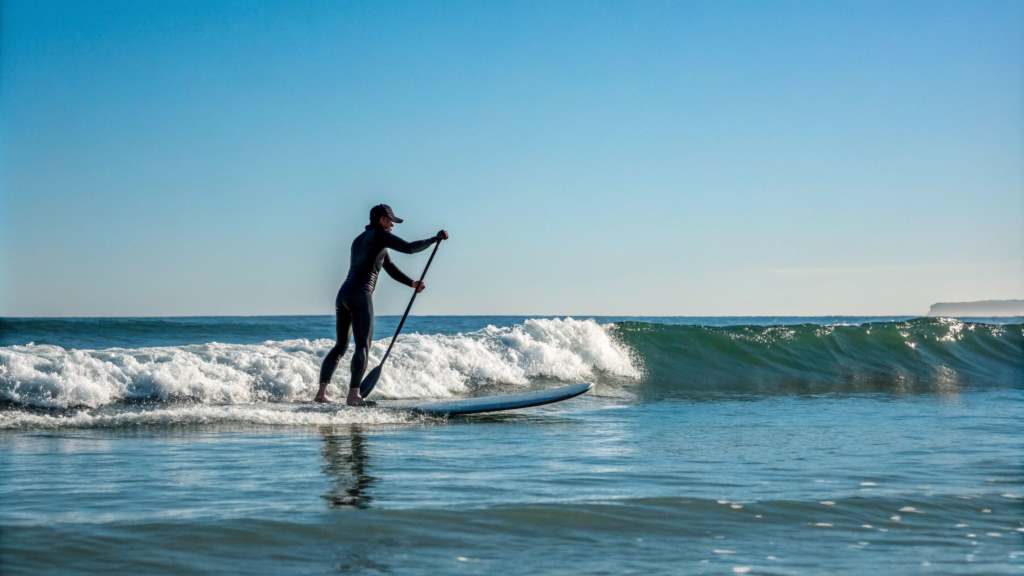
Before diving into the origin story of paddle surfing, it’s important to first understand what the sport entails. Paddle surfing, or stand-up paddleboarding, involves standing on a large, stable board while using a paddle to move through the water. It combines elements of surfing and kayaking, offering a unique experience on both calm and wave-filled waters.
The Rise of Paddle Surfing
Over the years, paddle surfing has evolved into a sport that can be practiced on lakes, rivers, and oceans. Whether it’s a serene paddle through a lake or riding big waves, the sport has endless possibilities. But who were the visionaries that brought it all to life?
The Roots of Paddle Surfing: Hawaii’s Influence
Paddle surfing didn’t simply materialize out of nowhere. Its origins can be traced back to Hawaii, where ancient Polynesians used large boards for transportation and recreation. This form of surfing, called “canoe surfing,” was an early form of paddleboarding. But the credit for modern paddle surfing largely goes to a few key figures in the 20th century.
The Pioneering Hawaiian Surfers
Although modern stand-up paddleboarding has been popularized in the 21st century, the roots of the sport are undeniably tied to Hawaii. During the 1950s and 1960s, Hawaii was a hotbed for surf culture, and legends like Duke Kahanamoku, a legendary swimmer and surfer, were already experimenting with paddling on surfboards. Duke, regarded as the father of modern surfing, might not have invented paddle surfing in its current form, but his innovations with surfboards helped lay the foundation for what would later become paddleboarding.
However, paddle surfing as we know it today was made mainstream by surfing instructor Laird Hamilton in the 1990s.
Laird Hamilton’s Role in Paddle Surfing

Laird Hamilton, often referred to as the “King of Big Waves,” played a pivotal role in the revival and popularization of paddle surfing. In the early 1990s, Hamilton, who was already well known for his achievements in big-wave surfing, began experimenting with a paddle and a surfboard on flat water, which he later demonstrated in some iconic photographs. This marked the turning point for the sport’s growth, especially among non-surfers who found it more accessible than traditional surfing.
Laird’s breakthrough moment occurred when he used a paddle to navigate big waves in Hawaii. His success caught the attention of other surfers, and the sport quickly gained a following, especially on the mainland U.S. and in international markets.
Paddle Surfing’s Transformation Into a Fitness Craze
Today, paddle surfing has become a multidimensional sport, attracting people from all walks of life. It’s not just about surfing waves; it’s a full-body workout that promotes balance, core strength, and endurance. It’s no wonder why it became a staple in fitness programs around the world.
In fact, according to the Outdoor Foundation, paddleboarding is one of the fastest-growing water sports in the U.S., with over 3.5 million participants recorded in recent years. This rise in popularity can be attributed to its accessibility for beginners, its low impact, and its appeal to people looking for a fun way to stay active.
Key Influencers Who Shaped Paddle Surfing’s Modern Form
While Laird Hamilton may be the most famous name associated with paddle surfing, other individuals also played crucial roles in shaping the sport’s modern form.
Dave Kalama: Innovation and Influence
Dave Kalama, a former professional waterman and paddleboarder, made a huge contribution to the development of modern paddle surfing. He worked closely with Laird Hamilton to refine the technique and tools necessary to master stand-up paddleboarding. Kalama’s influence cannot be overstated, especially since he helped develop specific paddles and boards that enhanced the sport’s accessibility.
Joe Bark: Paddle Surfing’s Equipment Revolution
A lesser-known but equally important figure in paddle surfing history is Joe Bark, who is credited with crafting some of the first high-performance paddleboards. In the early 2000s, Joe’s designs revolutionized paddle surfing, making it easier for surfers to glide on calm water while maintaining stability. His work in shaping the boards made paddleboarding a more user-friendly sport for people of all skill levels.
Paddle Surfing’s Global Appeal
Once limited to the shores of Hawaii, paddle surfing soon found its way to the mainland U.S., and then across the globe. Today, countries such as Australia, Spain, and Brazil have thriving paddle surfing communities. It’s also a popular sport in places with calm lakes and rivers, such as the Swiss Alps and Canada’s Rocky Mountains.
The global reach of paddle surfing is partially due to the sport’s inclusivity—it can be done on calm waters, on rivers, or on ocean waves. This versatility has made it attractive to people of all ages, backgrounds, and skill levels.
Paddle Surfing Equipment: Evolution and Innovation

The equipment used for paddle surfing has evolved significantly over time. Early paddleboards were heavy, unwieldy, and difficult to maneuver. Today’s boards are lightweight, durable, and made from a variety of materials like foam, fiberglass, and inflatable PVC. As the sport has grown, so has the technology behind the boards and paddles.
Paddles: From Wood to Carbon Fiber
The paddles themselves have seen dramatic improvements. Early paddles were often simple, wooden sticks, but modern paddles are constructed from lightweight materials like carbon fiber. This change in material has made paddles much stronger and easier to handle, improving the overall experience for paddlers.
Stand-Up Paddleboards: Stability and Shape
Modern paddleboards are designed for stability, balance, and versatility. Whether a beginner or an experienced paddler, modern boards offer the comfort and performance required for all types of water conditions. The size, shape, and material of the board are often tailored to the paddler’s goals—whether that’s calm water paddling, competitive racing, or wave surfing.
Paddle Surfing: A Growing Industry
The paddle surfing market continues to expand rapidly. According to a Grand View Research report, the global stand-up paddleboarding market is expected to grow from USD 3.85 billion in 2021 to USD 7.32 billion by 2030. The market growth is driven by increasing interest in outdoor water sports and the growing popularity of fitness-based activities.
Who Invented Paddle Surfing? A Collaborative Effort
While we can’t pinpoint one single person who invented paddle surfing, it is clear that Hawaii, Laird Hamilton, Dave Kalama, and Joe Bark all played key roles in shaping the sport. It’s the result of collective innovation that spanned decades, beginning with the ancient Polynesians and evolving with the pioneers of the 20th century.
Paddle Surfing’s Future: What’s Next?
Looking ahead, the future of paddle surfing looks bright. As more people embrace the sport, we can expect more innovative designs, better paddles, and larger communities to form worldwide. Additionally, we may see increased use of paddleboarding in fitness programs, therapeutic applications, and even competitive events. There’s also the growing trend of paddleboard yoga, which combines relaxation with exercise on the water, offering a unique experience that continues to attract enthusiasts.
Conclusion
Paddle surfing, also known as stand-up paddleboarding, is a sport with a rich history rooted in Hawaii’s ancient surfing culture. Although it was made famous by Laird Hamilton and his contemporaries in the 1990s, its origins go back centuries. Today, paddle surfing is enjoyed around the world by millions of people, whether for sport, fitness, or relaxation.
From its humble beginnings to its place in the modern sporting world, paddle surfing’s story is one of creativity, community, and adventure. The sport continues to evolve, and with new technologies and techniques, it will undoubtedly remain a favorite for generations to come.

