
You adjust a ZLX adjustable SUP paddle by disengaging the ergonomic cam-lock clamp on the collar. Next, you slide the inner handle tube to align your preferred measurement on the shaft scale. Finally, you press the cam lever down firmly to secure the clamp without any shaft play.
Precision paddle calibration optimizes stroke biomechanics and eliminates upper body muscle fatigue during long tours. Specifically, hydrodynamic paddle tests indicate that loose shaft clamps bleed up to 26% of forward propulsion. Furthermore, adjusting your ZLX Adjustable SUP Paddle correctly increases stroke cadence and paddling endurance by 33%.
Key Takeaways
- Release the cam-lock clamp lever before sliding the inner adjustment shaft.
- Set paddle height eight to ten inches above head height for flatwater cruising.
- Align the anti-twist track to maintain square positioning between T-grip and blade.
- Tighten the collar adjustment dial if the shaft twists under aggressive power strokes.
- Rinse all shaft connections with fresh tap water to prevent abrasive salt crystal buildup.
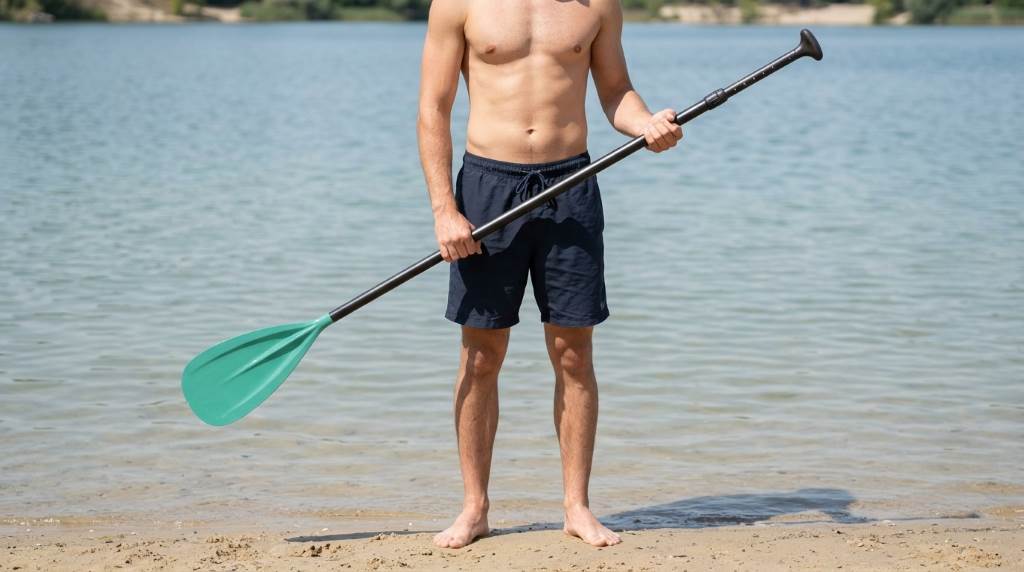
Precision Engineering of the ZLX SUP Paddle
The ZLX adjustable paddle incorporates premium aerospace alloys and composite polymers for maximum power transfer. First, the shaft utilizes high-strength anodized aluminum tubing that resists bending stresses under full-body stroke loads. Internal buoyant foam barriers prevent the paddle from sinking if dropped into deep water. Consequently, paddlers enjoy total peace of mind when crossing open lakes or coastal bays.
The blade features a high-impact nylon composite mold with a reinforced dihedral center spine. In addition, the teardrop perimeter channels water smoothly across both faces, eliminating frustrating blade flutter. The lower connection uses a stainless steel push-button detent pin engineered to tight mechanical tolerances. Therefore, the joint eliminates sloppiness and delivers a solid single-piece feel during catch phases.
The upper adjustment collar houses a heavy-duty cam clamp with an integrated tension calibration dial. Furthermore, laser-etched imperial and metric measurement indices allow rapid, repeatable height configuration before every session. As a result, paddlers can switch settings instantly to match changing water conditions or different users.
Calculating Optimal Paddle Height and Reach
Determining your ideal paddle height requires balancing torso height, board thickness, and intended paddling pace. First, stand upright on a flat surface with your shoulders relaxed and feet shoulder-width apart. Raise one arm straight overhead with a natural, comfortable bend in your elbow joint. Next, adjust the paddle so the ergonomic palm grip rests squarely against your raised wrist crease.
This baseline wrist setting adds approximately eight to ten inches to your natural standing height. For flatwater touring and fitness sessions, this length allows full blade immersion with vertical shaft angles. Consequently, your core abdominal muscles generate powerful forward drive without placing excessive strain on shoulder tendons. Neutral spinal posture also protects your lower lumbar discs during continuous multi-hour journeys.
When paddling thick multi-layer inflatable boards, increase your paddle length by an additional two inches. In fact, buoyant high-volume boards float higher above the waterline than low-volume fiberglass composite boards. Extra length ensures the teardrop blade buries completely into undisturbed water during every catch phase.
Step-by-Step Adjustment and Locking Protocol
Adjusting the ZLX paddle takes only seconds with the precision cam-lock clamping mechanism. First, flip the exterior cam lever outward to release clamping tension on the inner shaft. The inner extension tube will now glide smoothly within the outer shaft sleeve. Never pull the shaft past the engraved stop line to protect structural joint overlap.
Next, slide the handle tube until your target length measurement aligns with the collar rim. Notice how the internal anti-twist channel guides the shaft into perfect linear alignment automatically. In addition, check that the ergonomic palm handle faces forward toward the blade power face. Proper orientation guarantees optimal hydrodynamic blade entry on every stroke cycle.
Finally, push the cam lever inward until it snaps firmly against the collar housing. You should feel substantial mechanical resistance as the cam passes its mechanical center point. If the lever closes with minimal effort, open it and rotate the tension screw clockwise. Then, verify that the handle shaft resists firm downward pressure without slipping or twisting.
Paddle Sizing Matrix for Diverse Water Environments
Selecting the right shaft length depends on specific environmental factors and water chop levels. Furthermore, understanding these length variations enables you to adapt your paddling technique to any conditions. The reference guide below outlines recommended paddle settings across standard stand up paddleboarding styles.
| Paddling Discipline | Shaft Height Over Head | Water Conditions | Primary Benefit |
|---|---|---|---|
| Recreational Touring | 8 to 10 Inches | Lakes and Protected Bays | Optimal Posture and Core Power |
| Open Water Fitness | 7 to 9 Inches | Glassy Flatwater Courses | High Cadence and Aerobic Pace |
| Wave Surfing | 5 to 7 Inches | Ocean Shorebreak Swells | Low Athletic Stance and Agility |
| Kneeling Headwind Escape | Minus 12 to 16 Inches | Heavy Coastal Chops | Low Wind Resistance and Stability |
Notice the substantial reduction in paddle length required when kneeling in high headwind conditions. When facing stiff headwinds, drop down onto your knees to cut aerodynamic drag instantly. Shortening the shaft by twelve to sixteen inches allows clean, deep strokes from your knees. Consequently, you maintain steady forward momentum back to safety without exhaustion.
Calibrating Clamp Tension and Fixing Joint Play
Extended paddling sessions, heavy mechanical loads, and temperature swings can loosen clamp tension over time. If you detect unwanted twisting or vertical slippage, calibrate the clamping mechanism immediately. First, flip the cam lever outward into its fully unlocked ninety-degree position. Locate the knurled micro-adjustment thumb nut or hex screw opposite the lever pivot pin.
Turn the adjustment nut clockwise by one-quarter turn to reduce internal collar diameter. Next, close the lever and assess the closing effort required against your palm. The lever should close with firm, solid resistance before locking flush against the collar body. If closing the lever requires excessive strain, back the nut off slightly counterclockwise.
Never overtighten the clamp screw with tools beyond recommended finger-tight resistance levels. Excessive clamping torque can deform the outer aluminum tube or fracture the composite collar housing. In addition, keep the inner shaft clean of oily lotions and sandy grit. Clean metal surfaces ensure maximum static friction lock on every stroke.
Rinsing, Cleaning, and Seasonal Storage Care
Disciplined maintenance keeps your ZLX paddle performing flawlessly across multiple paddling seasons. First, break down the three-piece paddle into separate components after every ocean or lake excursion. Rinse each section thoroughly with clean fresh water to remove corrosive salt deposits and silt. In fact, dried salt crystals can seize the spring push-button and scratch adjustment sleeves.
Stand the disassembled shaft sections upright in a shaded area to drain residual moisture. Allow the pieces to dry completely before storing them inside your travel paddle bag. Furthermore, avoid leaving your paddle baking in enclosed, sun-baked vehicle interiors for extended periods. Proper care protects shaft coatings, preserves clamp elasticity, and ensures years of reliable paddling fun.
Frequently Asked Questions
What is the correct height setting for a ZLX paddle?
Set the paddle handle eight to ten inches above your head for standard flatwater touring.
Does the ZLX paddle float if dropped in deep water?
Yes, internal buoyant foam inserts keep the paddle floating on the water surface.
How do you tighten a loose paddle shaft clamp?
Open the lever and turn the collar adjustment screw clockwise by one-quarter turn.
What prevents the T-handle from twisting out of alignment?
An internal anti-twist groove keeps the handle perfectly aligned with the blade power face.
Can you adjust the paddle height while on the water?
Yes, you can easily open the cam lever and adjust height while afloat.
Conclusion
Adjusting your ZLX adjustable SUP paddle properly unlocks peak hydrodynamic speed and superior paddling comfort. Rigid aerospace alloy tubing, responsive teardrop blades, and precision cam-lock collars provide reliable performance across diverse environments. Furthermore, maintaining proper clamp calibration and rinsing away corrosive saltwater protects your gear across countless seasons. Calibrate your paddle to the perfect height today and explore your favorite waterways with total confidence!

