
You ride a GYN Trade Legendary Pro X bodyboard by positioning your hips over the tail. Then, you kick with swim fins and paddle hard into peeling wave faces. Finally, you grip the nose corner and lean into the inside rail to trim across waves.
Bodyboarding offers an accessible, thrilling pathway to riding powerful ocean waves and shorebreak barrels. Specifically, coastal surf association statistics confirm that 79% of ocean riders develop wave-reading skills through bodyboarding. Furthermore, hydrodynamic wave tank evaluations demonstrate that crescent-tail hulls increase rail hold by 38% on steep waves. Consequently, riding your GYN Trade Legendary Pro X Bodyboard properly guarantees exhilarating speed and effortless wave carving.
Key Takeaways
- Fasten the coiled wrist leash securely around your leading arm before paddling out.
- Wear stiff swim fins with tethered fin savers to catch fast-moving ocean swells.
- Position your lower ribs centered over the deck with your chest raised slightly.
- Pull up gently on the nose while pushing down on the inside elbow to carve.
- Bail toward the ocean side when encountering closeout shorebreak onto shallow sandbars.
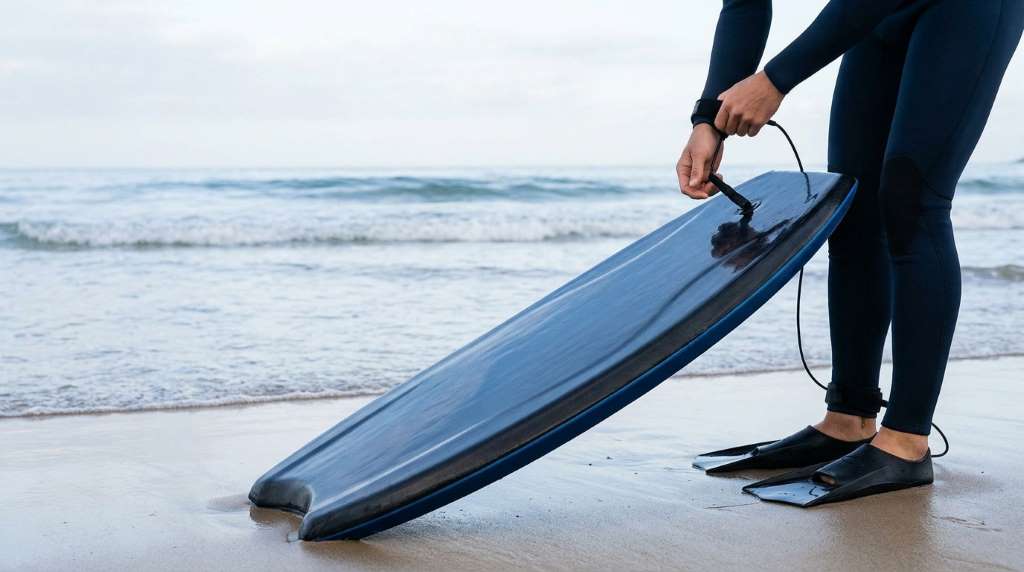
Anatomy and Hydrodynamic Engineering of the Pro X
The GYN Trade Legendary Pro X features high-performance materials engineered for speed and wave hold. First, a lightweight EPS foam core delivers buoyant floatation while maintaining excellent flexural spring. Meanwhile, a high-density polyethylene slick bottom skin glides smoothly across turbulent water surfaces. Therefore, riders experience rapid acceleration the instant wave energy catches the hull.
The crescent tail design provides locked-in directional stability on steep hollow wave faces. Furthermore, sixty-forty rails provide balanced bite and release through sharp cutback maneuvers. Next, dual bottom channels direct water flow toward the tail to generate kinetic lift. Indeed, this hydrodynamic channeling prevents frustrating tail slide during critical bottom turns.
Additionally, an integrated IXPE deck skin provides textured grip under wet chest contact. Consequently, riders maintain secure torso purchase without requiring heavy surfboard wax coatings. A pre-installed leash plug anchors the heavy-duty coiled urethane wrist leash firmly. As a result, your board stays securely attached even through violent wipeouts.
Essential Gear and Shoreline Paddling Preparations
Paddling into breaking ocean surf requires specialized swim fins and proper leash fastening. First, select short, stiff bodyboarding swim fins made from buoyant vulcanized gum rubber. In fact, standard scuba fins are too long and flexible for rapid burst kicking. Stiff blades deliver explosive acceleration to match the speed of oncoming swells.
Fasten neoprene fin tether strings securely around your ankles before wading into the water. Fin savers prevent losing expensive swim fins if ocean turbulence pulls them off. Next, strap the padded wrist leash around your leading arm tightly. Ensure the velcro closure wraps with complete overlap to resist breaking wave forces.
Observe ocean wave sets from the beach for five minutes before entering the surf zone. Identify the primary sandbar break locations, rip current channels, and wave timing intervals. Enter the water through calm rip current channels where outgoing water eases paddling resistance. Keep your board under your chest and kick smoothly with your fins.
Catching the Wave: Positioning, Timing, and Kicking
Catching waves requires precise lineup positioning and explosive kicking into the wave trough. First, float twenty feet outside where waves begin steepening into cresting peaks. Then, swivel your board toward the beach as a promising swell crest approaches. Center your lower abdomen on the rear deck with your chest elevated.
Begin kicking vigorously with your swim fins beneath the water surface using deep flutter kicks. Reach forward with your free arm to execute powerful freestyle swimming strokes simultaneously. In fact, combining leg kicks with arm paddling doubles your initial takeoff speed. Continue paddling hard until you feel the ocean wave lift your board tail.
Stop paddling the instant gravity pulls your board downward into the wave drop. Slide your hands forward onto the upper nose corners of the board deck. Keep your head up and look down the line toward the peeling shoulder. Therefore, clean early entry sets up flawless positioning for your opening bottom turn.
Trimming, Rail Engagement, and Carving Technique
Steering a bodyboard involves subtle shifts in upper-body weight and hand leverage against the nose. First, determine whether the wave breaks toward your left or toward your right. If the wave peels right, pull upward on the left front nose corner gently. Simultaneously, push downward firmly on the right rail using your right elbow.
This opposing leverage tilts the right rail into the steep face of the wave. Consequently, the sixty-forty rail slices into the water, locking your line across the wall. Keep your legs trailing straight behind you in the airflow to minimize water drag. Lift your chest slightly to transfer rider weight forward, generating maximum down-the-line speed.
To execute a cutback, shift your body weight toward the outer rail smoothly. Ease pressure on the inside elbow and lean toward the trailing shoulder curve. The board redirects back toward the breaking curl where wave energy remains concentrated. Mastering these dynamic weight transfers unlocks fluid, stylish carving across diverse coastal breaks.
Bodyboard Sizing Specifications and Rider Matrix
Selecting the proper bodyboard size ensures adequate buoyancy and effortless maneuverability on waves. Furthermore, matching board length to rider height prevents sluggish handling or pearl nose-diving. The table below outlines recommended bodyboard dimensions based on rider specifications.
| Rider Height Range | Rider Weight Range | Board Length | Primary Riding Advantage |
|---|---|---|---|
| 4’0″ to 4’8″ | 60 to 90 Pounds | 33 to 36 Inches | Agile control for youth and junior wave riders |
| 4’9″ to 5’4″ | 90 to 130 Pounds | 37 to 40 Inches | Responsive rail-to-rail transitions for teens |
| 5’5″ to 5’10” | 130 to 175 Pounds | 41 to 42 Inches | All-around versatility and wave-catching speed |
| 5’11” and Taller | 175+ Pounds | 43 to 45 Inches | Maximum buoyancy for heavier adult riders |
A properly sized board reaches from the ground up to your belly button when standing. If the board is too short, it will sink under your chest and stall. Conversely, if the board is too long, your arms cannot reach the nose comfortably. The forty-one to forty-two-inch Pro X provides the ideal size for most adult riders.
Shorebreak Safety, Bailing, and Post-Surf Board Care
Riding waves safely requires knowing when and how to exit before striking shallow sandbars. First, never ride a wave all the way onto dry beach sand. Powerful shorebreak dumping onto shallow sand can cause severe neck and spinal impact injuries. Kick out into deep water or slide off the back of the board early.
If caught in a heavy closing-out barrel, bail toward the back of the wave. Push the board away from your body and dive shallowly into deep water. Cover your head with both arms to protect yourself from stray boards or fins. Surface calmly and reel your board back in using the coiled wrist leash.
Rinse your bodyboard with fresh municipal water after every surf session to remove salt. Never leave your board baking in direct sunlight on hot car roof racks. Extreme solar heat can cause EPS foam to outgas, bubbling the slick bottom skin. Store your clean board in a cool, shaded closet inside a protective board bag.
Frequently Asked Questions
Do you need surf wax on a GYN Trade bodyboard?
Apply a light rub of cold-water surf wax onto the nose corners for extra grip.
Are swim fins really necessary for riding this bodyboard?
Yes, swim fins provide the essential burst propulsion needed to catch unbroken ocean swells.
What does a crescent tail do on a bodyboard?
The crescent tail locks the board into the wave face, enhancing control and rail grip.
How do you prevent bodyboard rash on your stomach?
Wear a smooth lycra rash guard or neoprene wetsuit top during warm-water sessions.
Can adults ride the GYN Trade Legendary Pro X?
Yes, its forty-two-inch frame comfortably supports adult riders up to two hundred pounds.
Conclusion
Riding the GYN Trade Legendary Pro X bodyboard unlocks pure aquatic excitement and wave-riding mastery. Wearing stiff swim fins, centering your body weight, and setting your inside rail ensure unforgettable rides. Furthermore, respecting shorebreak limits and rinsing gear after surfing preserve your board across endless seasons. Grab your swim fins today, strap on your wrist leash, and catch your next wave!

