
Patch a Funwater stand up paddle board by finding the leak, cleaning the damaged area, applying the correct PVC adhesive, and allowing enough curing time. A proper repair restores air retention, improves safety, and helps extend the board’s usable life.
Inflatable paddle boards continue growing in popularity, with industry reports showing millions of participants enjoying paddle sports every year. If you own a Funwater Inflatable Stand Up Paddle Board, learning simple repair techniques saves money and prevents unnecessary replacements. Fortunately, most small punctures and minor tears require only basic tools and careful preparation. This guide explains every important repair step using practical methods suitable for beginners and experienced paddlers alike.
Why Your Funwater Paddle Board Needs Proper Patching
Small punctures quickly become larger leaks when ignored during regular paddling sessions. Early repairs protect internal pressure and maintain reliable board performance.
Additionally, correct repairs reduce unnecessary material waste and increase the board’s overall service life. Proper maintenance also helps preserve stability during every outing.
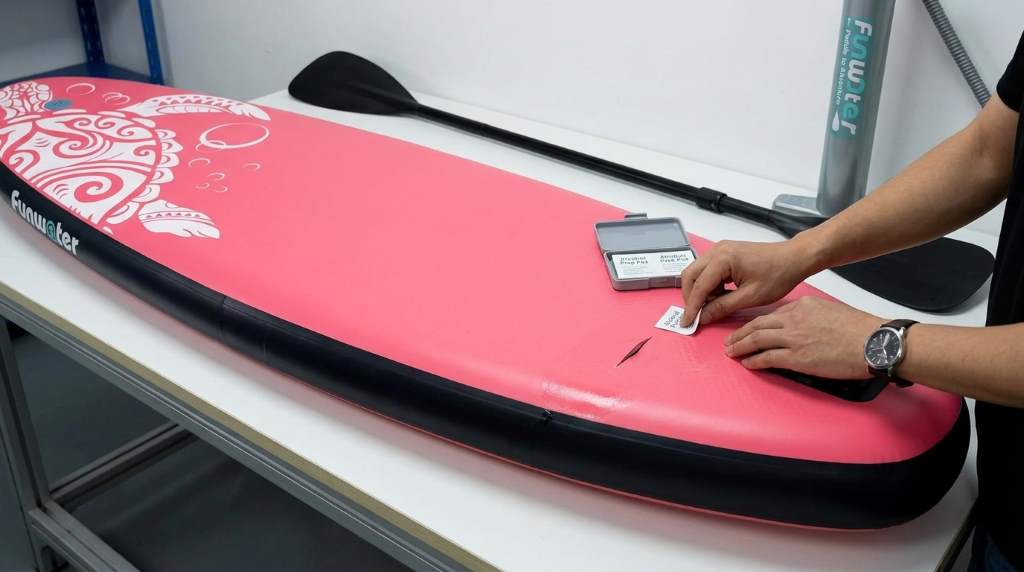
Signs Your Paddle Board Needs a Patch
- The board loses noticeable air within several hours.
- You hear air escaping from one location.
- A visible puncture appears on the PVC surface.
- The fin box area shows small cracks.
- A seam leak develops after heavy use.
- The repair kit adhesive has worn away.
Tools and Materials You Need
Gather every repair item before starting because preparation prevents mistakes during adhesive application. Organized tools also improve repair quality and speed.
- PVC repair patch
- PVC adhesive made for inflatable paddle boards
- Rubbing alcohol
- Clean microfiber cloth
- Fine sandpaper
- Marker
- Small roller or spoon
- Protective gloves
How to Find the Leak
Use the Soap Water Method
Inflate the board until it reaches normal operating pressure before beginning leak detection. Next, spray soapy water across suspicious locations.
Bubbles immediately reveal escaping air and clearly identify the damaged section. Mark every leaking spot using a waterproof marker.
Inspect Common Damage Areas
Look closely around seams, rails, valve connections, and fin boxes for hidden punctures. These locations experience repeated stress during transportation and storage.
Prepare the Surface Before Patching
Completely deflate the board before cleaning the repair area with rubbing alcohol. Remove dirt, sunscreen residue, and moisture thoroughly.
Lightly sand the damaged section because rough surfaces improve adhesive bonding strength. Afterwards, wipe away remaining sanding dust using a clean cloth.
How to Patch a Funwater Stand Up Paddle Board
Step 1: Cut the Patch Correctly
Choose a patch extending at least one inch beyond every damaged edge. Rounded corners reduce peeling during long term use.
Step 2: Apply PVC Adhesive
Spread a thin, even adhesive layer across both repair surfaces using careful strokes. Follow the adhesive manufacturer’s recommended waiting period.
Step 3: Position the Patch
Carefully align the patch before pressing because repositioning weakens adhesive performance afterward. Start pressing from the center toward every edge.
Step 4: Remove Air Pockets
Use a roller or smooth spoon to remove trapped air beneath the patch. Firm pressure creates stronger contact between both PVC surfaces.
Step 5: Allow Complete Curing
Leave the repaired board untouched during the complete curing period recommended by the adhesive manufacturer. Avoid inflating the board too early.
How Long Should You Wait Before Using the Board?
Most quality PVC adhesives require at least twenty four hours for dependable bonding strength. Longer curing often produces stronger long term repairs.
Furthermore, avoid direct sunlight during curing because excessive heat affects adhesive consistency. Store the board on a flat surface indoors.
Test the Repair Before Paddling
Inflate the board gradually until reaching the recommended operating pressure. Watch the patched area carefully for lifting edges.
Repeat the soap water test across the repaired location to confirm complete sealing. Successful repairs show no escaping bubbles.
Common Patching Mistakes to Avoid
- Skipping surface cleaning before adhesive application.
- Using household glue instead of PVC adhesive.
- Applying excessive adhesive thickness.
- Inflating before complete curing.
- Ignoring small punctures after discovery.
- Using damaged repair patches.
How to Prevent Future Damage
Always rinse the board after every session to remove sand and debris. Clean storage reduces unnecessary surface abrasion.
Likewise, avoid dragging the inflated board across rough pavement or sharp rocks. Carrying the board protects the PVC material.
Store the paddle board inside a cool, dry location whenever possible. Proper storage reduces pressure damage from changing temperatures.
Finally, inspect the board before every outing because early detection prevents larger repairs later. Regular maintenance also improves overall reliability.
When You Should Replace Instead of Patch
Large seam failures usually require professional repair rather than simple home patching methods. Extensive internal damage often exceeds basic repair capabilities.
Similarly, repeated leaks around several areas may indicate advanced material wear over time. Replacement becomes the safer long term solution.
Final Thoughts
Learning how to patch a Funwater stand up paddle board helps you handle common damage confidently and safely. Careful preparation, quality materials, and patience create dependable repairs that last longer.
Inspect your paddle board regularly, repair small punctures immediately, and follow every curing recommendation carefully. Consistent maintenance keeps your equipment ready for every adventure on the water.
Frequently Asked Questions
Can I patch a Funwater paddle board without replacing the PVC?
Yes, most small punctures only require a proper PVC repair patch and suitable adhesive.
How long does a paddle board patch usually last?
A correctly installed PVC patch can last for many years with proper care.
Can I use super glue for paddle board repairs?
No, super glue cannot provide the flexible waterproof bond required for inflatable PVC boards.
Should I fully inflate the board after repairing it?
Yes, but only after the adhesive has completely cured according to the product instructions.
How can I confirm the repair worked?
Inflate the board and perform a soap water leak test to verify an airtight seal.

