
To deflate the Feath-R-Lite paddle board, remove the fin, open the air valve, press the valve pin to release air, then roll the board tightly toward the valve. This simple process protects the material, saves storage space, and helps extend your board’s lifespan.
Proper storage starts with proper deflation. According to industry estimates, inflatable paddle boards can last more than 7 years with regular care, while proper storage significantly reduces unnecessary material stress. If you own a Feath-R-Lite Inflatable Stand Up Paddle Board, learning the correct deflation process keeps it ready for every adventure.
Why Proper Deflation Matters
Correct deflation protects the board’s internal seams and outer PVC layers. It also makes packing faster and prevents unwanted creases during storage.
Many owners rush this process after paddling. However, spending a few extra minutes reduces wear and keeps the board performing consistently.
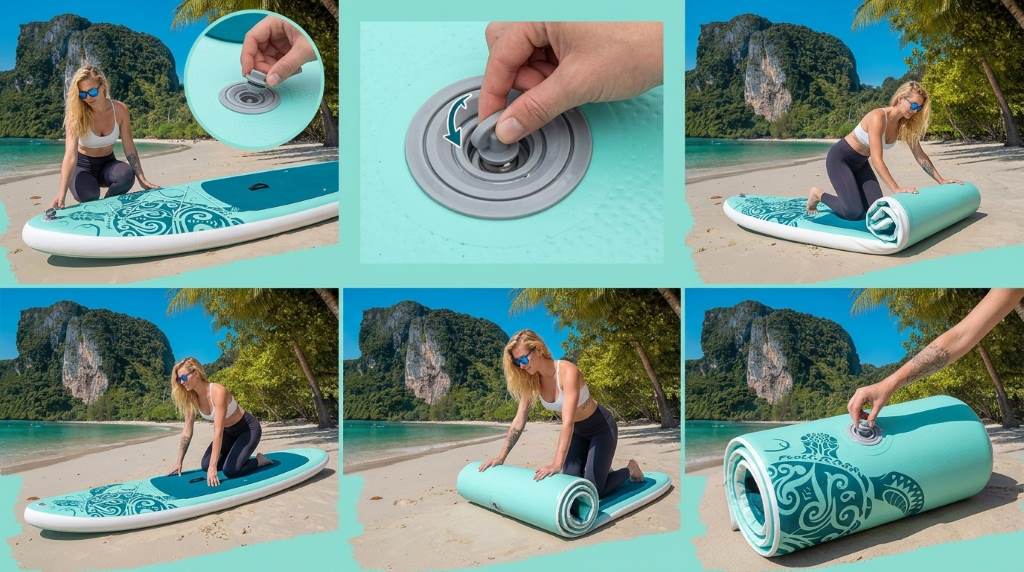
Items to Prepare Before Deflating
Gather everything before starting to avoid interruptions. A clean workspace also prevents dirt from entering the valve.
- Clean towel
- Board carrying bag
- Pump with hose
- Fresh water if rinsing is necessary
- Dry storage area
Step by Step Guide to Deflate the Feath-R-Lite Paddle Board
Step 1: Move the Board to a Clean Surface
Place the paddle board on flat ground before opening the valve. Sharp rocks and rough concrete can damage the material.
If possible, choose grass or a clean mat. This simple habit reduces scratches and helps protect the bottom layer.
Step 2: Remove the Center Fin
Detach the removable fin before releasing air from the board. This prevents unnecessary pressure around the fin box.
Store the fin inside its protective pouch immediately. Consequently, you reduce the chance of losing small parts.
Step 3: Dry the Board First
Wipe away standing water using a soft towel before opening the valve. Moisture trapped inside the roll may encourage mildew.
If the board appears dirty, rinse it with fresh water first. Then allow several minutes for surface drying.
Step 4: Open the Air Valve
Locate the inflation valve near the tail section of the board. Unscrew the protective cap carefully without forcing it.
Check the valve for sand or debris before pressing it. Clean particles away gently if necessary.
Step 5: Press the Valve Pin
Push the valve pin downward and twist it into the open position. Air will immediately begin escaping from the chamber.
Keep your face away from the valve during release. The escaping air may produce noticeable pressure initially.
Step 6: Roll the Board Toward the Valve
Begin rolling from the nose while moving steadily toward the tail valve. This direction forces remaining air outside efficiently.
Apply even pressure throughout the roll for better results. Avoid folding the board sharply during this process.
Step 7: Remove Remaining Air
Reconnect the pump hose if your pump supports deflation mode. This feature removes trapped air more effectively.
If your pump lacks this option, continue rolling firmly by hand. Most remaining air will leave through the valve.
Step 8: Close the Valve
Return the valve pin to its normal position after removing the air. Screw the valve cap back securely.
This step prevents dust from entering during storage. It also protects the valve from accidental damage.
Best Way to Fold the Paddle Board
Always fold the board loosely without forcing tight corners. Gentle folds reduce long term stress on the material.
Keep the deck pad facing inward whenever possible. This method helps protect the textured surface during transport.
- Roll evenly from the nose.
- Keep the valve exposed until finishing.
- Avoid twisting the board.
- Secure the roll with storage straps.
Common Mistakes to Avoid
Several small mistakes shorten the lifespan of inflatable paddle boards. Fortunately, each mistake remains easy to prevent.
- Storing the board while wet.
- Leaving excessive air inside.
- Rolling too aggressively.
- Ignoring sand around the valve.
- Keeping the board under direct sunlight for extended periods.
Storage Tips After Deflation
Store the paddle board inside a cool and dry location. Stable temperatures help preserve adhesive strength and flexible materials.
Avoid placing heavy objects on top of the storage bag. Constant weight may flatten protective foam sections unnecessarily.
Inspect the board every few months during long term storage. Early inspections help identify small problems before they become expensive.
Cleaning Before Packing
Fresh water removes salt, dirt, and sand after each paddling session. Clean surfaces remain easier to inspect for damage.
Use mild soap only when necessary for stubborn stains. Strong chemicals may affect the protective coating over time.
How Often Should You Deflate Your Paddle Board?
Deflate the board whenever you finish using it for several days. This practice makes transportation and storage much easier.
If you paddle daily, temporary inflation remains acceptable under proper pressure limits. However, avoid prolonged exposure to intense heat.
Signs Your Board Needs Extra Inspection
Watch for unusual air loss after inflation before every outing. Slow leaks often indicate minor valve or seam issues.
Also inspect handles, fin boxes, and deck pads regularly. Small repairs remain easier than replacing major components later.
Final Thoughts
Learning how to deflate the Feath-R-Lite paddle board correctly protects your investment and simplifies every trip. Following these straightforward steps keeps the board clean, compact, and ready whenever you plan your next paddle.
Practice this routine after every session for consistent results. Start using these storage habits today to enjoy better performance and longer equipment life.
Frequently Asked Questions
How long does it take to deflate the Feath-R-Lite paddle board?
Most users finish the entire process within five to ten minutes.
Should I dry the board before storing it?
Yes, always dry the board completely before rolling and storing it.
Can I leave some air inside the paddle board?
No, removing nearly all air makes storage safer and easier.
Is it safe to fold the board tightly?
No, gentle rolling protects the material better than tight folding.
Should I use the pump for deflation?
Yes, if your pump supports deflation mode, it removes trapped air more efficiently.

